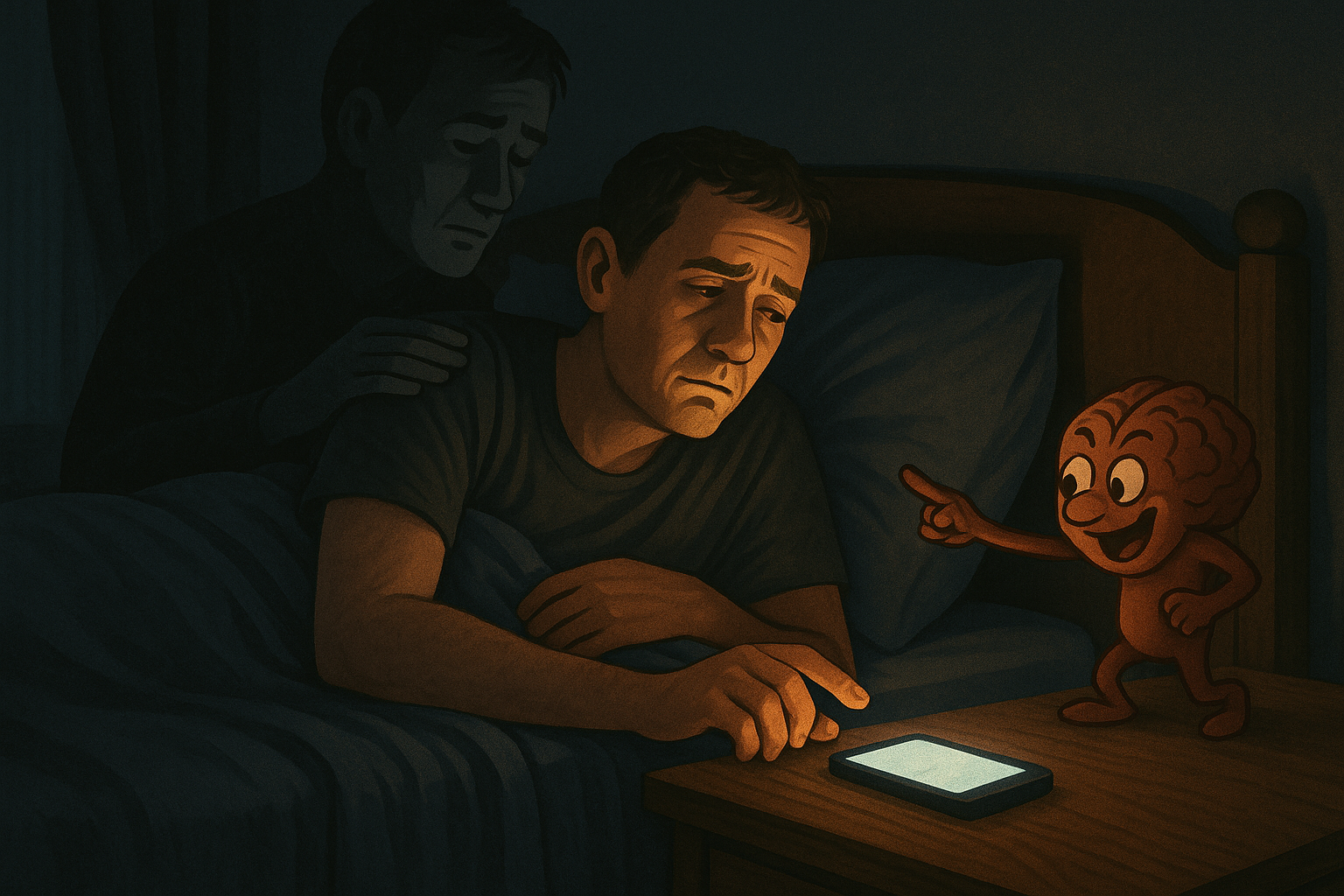
You’ve promised yourself you’ll cut back on screen time in bed.
Yet, here you are, doom-scrolling at midnight, telling yourself, “I need this to unwind.”
You know you should stop, but the urge is strong.
The next morning, tired and a bit guilty, you think:
“Why do I always do this, even when I know better?”
This post is part of my continuing series exploring the key lessons from each chapter of my book, MindShifting: Stop Your Brain from Sabotaging Your Happiness and Success. Last week, I dove into the topic of inner critics and Saboteurs in Chapter 3. This week, we turn to Chapter 4—where we unpack how cognitive dissonance and cognitive bias shape our choices, and what you can do to break free from their grip.
Why We Defend Our Mistakes (and What Our Brains Are Up To)
Imagine a student is called out for saying something unkind. Instead of apologizing, they defend their actions, coming up with justifications and excuses.
This isn’t just stubbornness—it’s our brain’s natural defense system at work.
Cognitive dissonance is that tension we feel when our actions don’t match our values. Our minds hate that feeling, so we try to resolve it—often by changing our story rather than our behavior.
- “I believe in health, but it’s been a tough day. I deserve this treat.”
- “I want to support my team, but I can’t help skipping practice.”
- “Of course I value honesty, but everyone cheats a little.”
Cognitive biases are the shortcuts our brains use to make sense of the world—except they often lead us to ignore new information, dismiss evidence, or jump to conclusions that fit what we already want to believe.
- Confirmation bias: We seek evidence that confirms our story and ignore the rest.
- Negative bias: We focus more on problems than progress.
- Affinity bias: We believe those who think and act like us must be right.
All of this happens in the limbic brain—fast, emotional, and protective. That’s why direct advice or criticism so often bounces off, no matter how logical or well-intended.
Real Life: Where Dissonance and Bias Show Up
Maybe you say you value rest but stay up late working.
Maybe you want to eat healthy but justify pizza “just this once.”
Or you think you’re open-minded, but instantly dismiss a colleague’s idea because it’s not your own.
These thinking errors aren’t flaws—they’re features of our brains, built for survival and efficiency. But they can hold us back, keep us stuck, and shut down curiosity, connection, and growth.
So, What Happened With That Midnight Scroller?
What if, the next morning, when you can look at your patterns with clear eyes, you took the time to really think about that voice that tells you “I deserve this!” and realize it’s just your brain trying to resolve discomfort, not your true intention.
Instead, you might get curious: “What am I really feeling? What else might help me unwind?”
Maybe the next time you start to reach for your phone in bed, instead you read a book, take a few breaths, or simply turn out the light.
The first night, it is likely to be uncomfortable.
The second night, it will be a little easier.
Over time, you might start to notice your choices aligning more with your goals—and the urge to justify might just fade.
This Is Just One Piece of Chapter 4
In Chapter 4, you’ll learn:
- How to spot your own thinking errors and dissonance in the moment
- Why honest self-awareness (not just willpower) is the key to change
- Simple tricks for catching cognitive bias in yourself and others
- Practical ways to shift from knee-jerk reactions to more resourceful thinking
If you want to understand why you keep getting in your own way—and how to break the cycle—this chapter offers the science and tools to do it.
Ready for a clearer mind and better choices?
Dive into Chapter 4 for strategies to overcome bias and close the gap between your values and your actions.
📘 Buy the book on Amazon
🌐 Visit MindShifting with Mitch
📬 Subscribe to the newsletter for weekly insights
Let’s keep shifting,
—Mitch

Leave a Reply