I remember a time, back when I was running my edtech business, that a product team meeting was getting tense.
The sales lead insisted we fast-track a feature a big client wanted “yesterday.” Our designer pushed back: rushing it would create a mess we’d pay for later.
I felt the heat rising in my chest and my fingers hovering over the keyboard, ready to fire off a “We’re doing it my way” message.
I was certain I was right.
And then I paused.
What I did next changed the entire conversation…
This post is part of my continuing series walking through the chapters of my book, MindShifting: Stop Your Brain from Sabotaging Your Happiness and Success. Last week I covered Chapter 4 here: https://mindshiftingwithmitch.blog/2025/07/29/when-your-brain-plays-tricks-how-cognitive-dissonance-and-bias-shape-and-sabotage-our-choices//.
Today we’re in Chapter 5, which focuses on the five Sage powers, your brain’s resourceful “muscles” that switch on once you’re out of survival mode—helping you tune into people and reality, see more possibilities, choose what truly matters, and take calm, purposeful action.
In practice, they turn certainty or judgment into curiosity and openness.
What “Explore” actually means (and what it’s not)
The second of the five Sage powers, for example, is exploration.
Think of an anthropologist, studying the remains of an ancient civilization in order to better understand what their lives must have been like.
What else can I learn?
What don’t I understand yet?
It’s curiosity without an agenda.
And here’s what exploration is not:
“Let’s explore why I’m right.”
That’s a Saboteur move—judging, arguing, trying to bolster a foregone conclusion.
Exploration isn’t a sneaky way to win. It’s a beginner’s mindset:
- Be open to new ideas
- Ask questions to understand
- Question assumptions (yours and theirs)
- Embrace differences
- Actively listen
- Stay curious
- Treat mistakes and setbacks as learning fuel
Shirzad Chamine suggests picturing yourself as a fascinated anthropologist. You’re not interrogating; you’re trying to understand people and context on their terms. If my wife and I disagree about weekend plans,
- “Defensive Mitch” might ask: Why is she being so difficult? How can I persuade her to do what I want?
- “Anthropologist Mitch” might ask: What would feel good for her? What would make this enjoyable for both of us? What’s motivating me? What is she reacting to in my ideas?
The point isn’t blame; it’s understanding.
That stance can prevent unnecessary conflict and deepen relationships—because people feel seen rather than judged.
“It’s not right or wrong—it’s just different”
We often judge before we understand. A few quick examples from cross-cultural moments:
- In many U.S. settings, steady eye contact = respect. But in parts of Asia and Latin America, a young person looks away from an elder to show respect. A judgmental mindset might be, “this person doesn’t respect me.” In contrast, an exploration mindset might simply be: “I wonder why this person is looking down.”
- A U.S. colleague asks an Indian colleague for help; the colleague says “yes,” but the task doesn’t happen. A reflexive judgment might be that the colleague is lazy or dishonest while a Sage-like exploration might ask if there is a cultural difference at play., such as saying ‘yes’ to preserve connection while awaiting other cues indicating timeline or feasibility.
AFS uses a great reminder: “It’s not right, it’s not wrong, it’s just different.” Exploration asks, What’s the context I’m missing? When we adopt that stance, we uncover communication gaps instead of blaming people.
Words matter less than your state of mind
Questions like “What happened?” or “Help me understand” can be Sage—or Saboteur—depending on your mindset. If the goal is to pin someone down, your tone will signal judgment and trigger defensiveness. If the goal is to learn, your curiosity will show—and people will open up.
Try this in a classroom or at work:
- Look at what you set up before the task (with curiosity, not self-blame).
- Explore what the other person did and why (again, curiosity).
- Ask about attitudes and constraints (yours and theirs) without assigning fault.
Exploration is often the opposite of control. When we’re afraid something won’t get done “right,” we tighten our grip. That’s limbic mode. Sage exploration loosens the grip, invites context, and often produces better ideas and more buy-in.
Important: You can’t access Sage powers from survival mode. First, intercept the Saboteurs, use your Self-Commander to shift into Sage, then explore.
Try both “positive” and “shadow” imagination
Exploration isn’t naïve. Jane McGonigal recommends balancing hope with realism:
- Positive imagination: What’s something good that could happen?
- Shadow imagination: What’s something bad that could happen?
From a place of curiosity, both questions are powerful. So are these:
- What could go wrong?
- What’s the worst that could happen?
- What if it’s not done on time?
- What if they beat us?
Asked with wonder instead of worry, these open doors instead of slamming them.
Back to that heated product meeting…
Instead of sending the “my way” message, I shifted into explore mode:
- I asked the sales lead, “What specifically is the client trying to solve this quarter?”
- I asked design, “What’s the minimum we could responsibly ship without creating tech debt?”
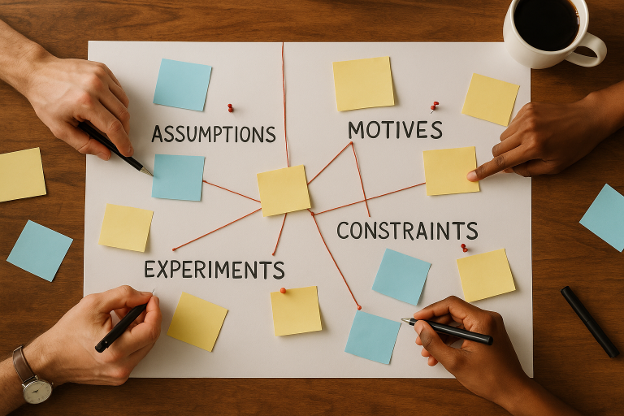
- I asked engineering, “What experiments could we run this week to de-risk?”
Within fifteen minutes, we had learned three key constraints we’d missed, defined a low-risk pilot the client could use, and scheduled a follow-up to evaluate results. No one “won,” but the team moved forward together—and the client felt heard.
That’s exploration doing its quiet magic: curiosity turning tension into insight.
This is just one piece of Chapter 5
Chapter 5 dives into all five Sage powers (from Positive Intelligence) that unleash your best thinking and collaboration:
- Empathize / Connect – Create safety and trust so people (including you) can think clearly.
- Explore – Today’s focus: curiosity without judgment to reveal what’s really true.
- Innovate – Generate fresh options by combining perspectives.
- Navigate – Align choices with your deeper values and long-term goals.
- Activate – Commit, take action, and iterate without self-sabotage.
If you want your days to feel more resourceful, collaborative, and creative, this chapter shows you how to get there—consistently.
Ready to practice exploration in your next tough conversation?
Start with one curious question, asked with genuine wonder. Then listen.
📘 Continue your MindShifting journey in the book: MindShifting: Stop Your Brain from Sabotaging Your Happiness and Success (available on Amazon)
🌐 Explore more at www.mindshiftingwithmitch.com
📬 Get weekly tools and stories: subscribe to the newsletter
Let’s keep shifting,
—Mitch
—
—
About MindShifting with Mitch Weisburgh
MindShifting is transforming how individuals, teams, and organizations unlock their full potential—whether in the classroom, the boardroom, or personal growth journeys. Developed by educator, author, and thought leader Mitch Weisburgh, MindShifting combines the latest insights from psychology, neuroscience, and practical experience to help people overcome barriers, shift mindsets, and achieve lasting results.
Through his writing, keynote talks, and engaging workshops, Mitch empowers educators, corporate teams, and life coaches to embrace new ways of thinking and problem-solving. His unique MindShifting framework provides practical tools for building resilience, resourcefulness, and collaborative skills that drive real-world change.
To continue your exploration of MindShifting, visit www.mindshiftingwithmitch.com.

Leave a Reply