A reflection on my conversation with Christina Eanes
As someone who has spent years unraveling what really helps us thrive under pressure, I have developed a deep appreciation for the forces that quietly shape our decisions. That’s why I always enjoy conversations where someone is willing to peel the onion back with me.
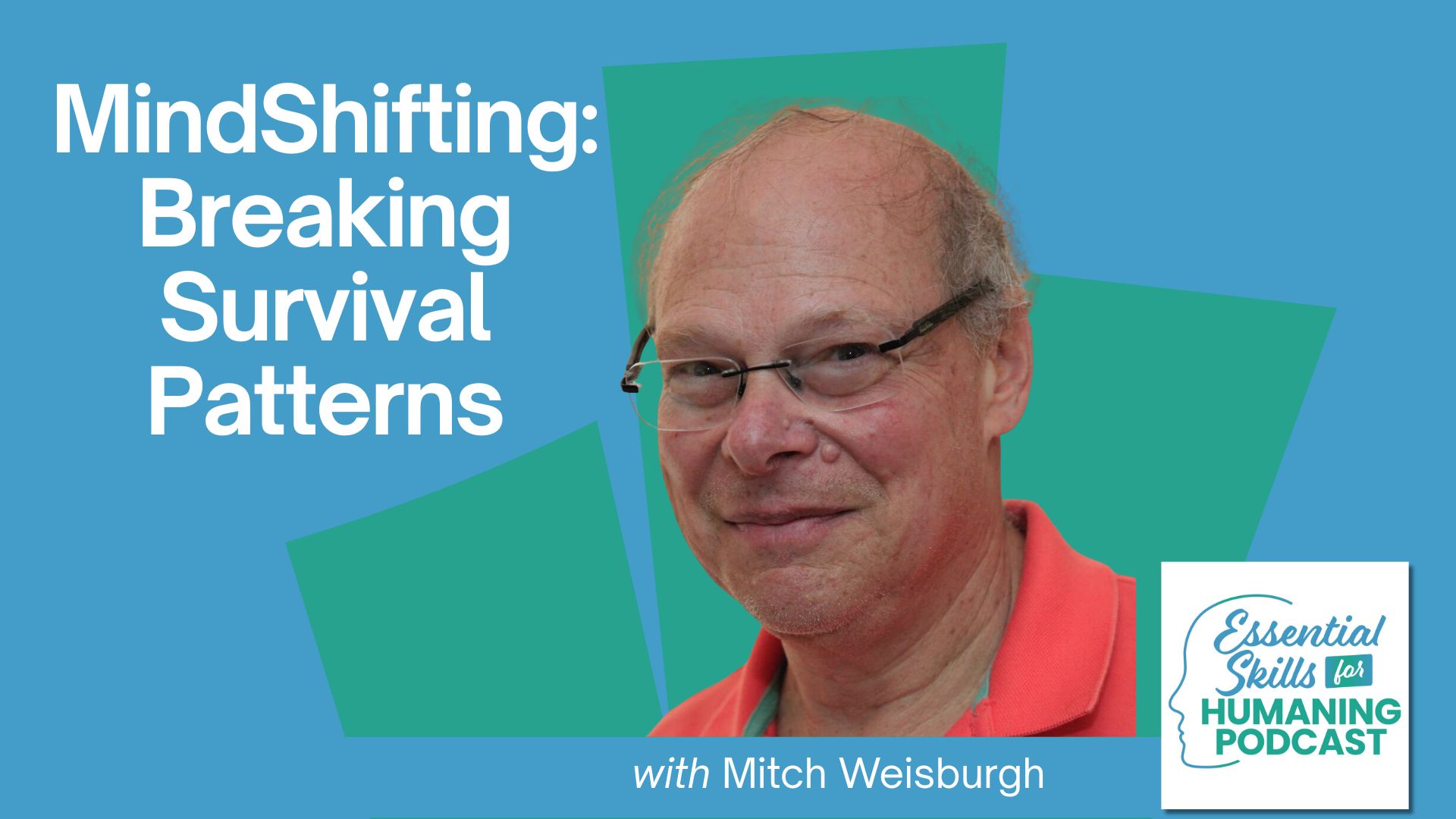
Recently, I joined Christina Eanes on her Essential Skills for Humaning podcast, and it became one of those rare, energizing dialogues where the topics keep widening while the insights keep getting sharper. Christina has a gift for naming what most of us feel but rarely articulate out loud, and together we explored two foundational ideas that sit at the heart of MindShifting:
- Why stress and anxiety pull us into unhelpful reactions, and
- Why conflict is not only useful, but often necessary for real growth.
The Stories We Tell Ourselves (and Why They Matter)
At one point in our discussion, Christina said something quietly profound:
“So we make up these stories. They come from…the evolution of our experiences, the people that were important in our lives or had influence over us. That’s a lot of influence over how we see things and we know how hard habits are to break as well, right?”
This is a truth I see every day in my work. Much of what we identify as “stress,” “anxiety,” or “reactivity” isn’t about the moment in front of us. It is about the stories our minds create about that moment.
Some of those stories once kept us safe. Others gave us structure. But many of them outlive their usefulness. They become familiar scripts that run in the background, often without our awareness, nudging us toward fight-or-flight responses even when nothing truly dangerous is happening.
Christina and I explored how quickly the brain can hijack our thinking when these old scripts activate. I shared some of the practices I’ve taught for years—techniques that can interrupt that automatic spiral:
- Recognizing when your thoughts shift into “survival mode”
- Using intentional self-talk to widen your perspective
- Applying mindfulness or creative expression to reset your emotional state
- Reaching out to a friend or stepping away for a short walk
- And, sometimes, simply becoming aware of the pattern in the first place
Often, that moment of awareness is enough to weaken the story’s grip. And when it’s not, calming strategies give us the breathing room to choose a different response.
Why We Actually Need Conflict
As valuable as our internal work is, Christina was quick to point out that it’s only half the equation.
“We need people who disagree with us in our life, and we need to appreciate that, right?”
That single line shifted us into the second major theme of the episode: conflict. Most people see conflict as something to avoid. But the reality is that healthy conflict is one of the fastest paths to clarity, empathy, and collaboration.
We talked through the five primary conflict-resolution styles and why each has its place. We also discussed tools like Motivational Interviewing and Strength-Based Feedback—approaches that turn disagreements into opportunities for connection, rather than ruptures to be repaired later.
This is a core idea in MindShifting: conflict isn’t a threat. It’s information. It’s energy. It’s a chance to learn something you couldn’t have discovered on your own.
When we treat conflict as inherently negative, we lose the creative spark that comes from friction. But when we approach it with curiosity and the right mindset, conflict becomes one of the most collaborative forces we have.
Six Skills That Help Us Thrive Under Pressure
Across the conversation, we touched on six foundational areas that help people flourish, especially when life gets complicated:
- Cultivating resourcefulness
- Building resilience in the face of setbacks
- Managing stress and anxiety with practical tools
- Strengthening support systems
- Harnessing the creative power of constructive conflict
- And communicating with greater clarity and intention
Each of these areas came with examples, strategies, and stories from our combined experiences—real-world tools listeners can begin using immediately.
If You Want to Go Deeper…
Of course, this description of episode barely scratches the surface of how we can rethink stress, reframe conflict, and build mindsets that help us move forward instead of getting stuck.
If you’re interested in listening the the entire conversation, check it out at Christina’s website or watch the full video, below.
And if you want a deeper, step-by-step framework for turning conflict into collaboration, you’ll find the full playbook in my new book MindShifting: Conflict and Collaboration—now available on Amazon.
Here’s to rethinking what’s possible, one shift at a time.

Leave a Reply