Three Practical Techniques That Do
We make decisions and solve problems every day. Some are straightforward. Others involve uncertainty, competing priorities, unpredictable reactions, and consequences we cannot fully anticipate.
Yet we often approach both kinds of situations the same way. We identify a problem, decide what we think will work, and take action.
When our first solution doesn’t work, we may become frustrated, blame others, or double down on our original approach.
There are better ways to make decisions. But to use them, we have to change how we approach problems in the first place.
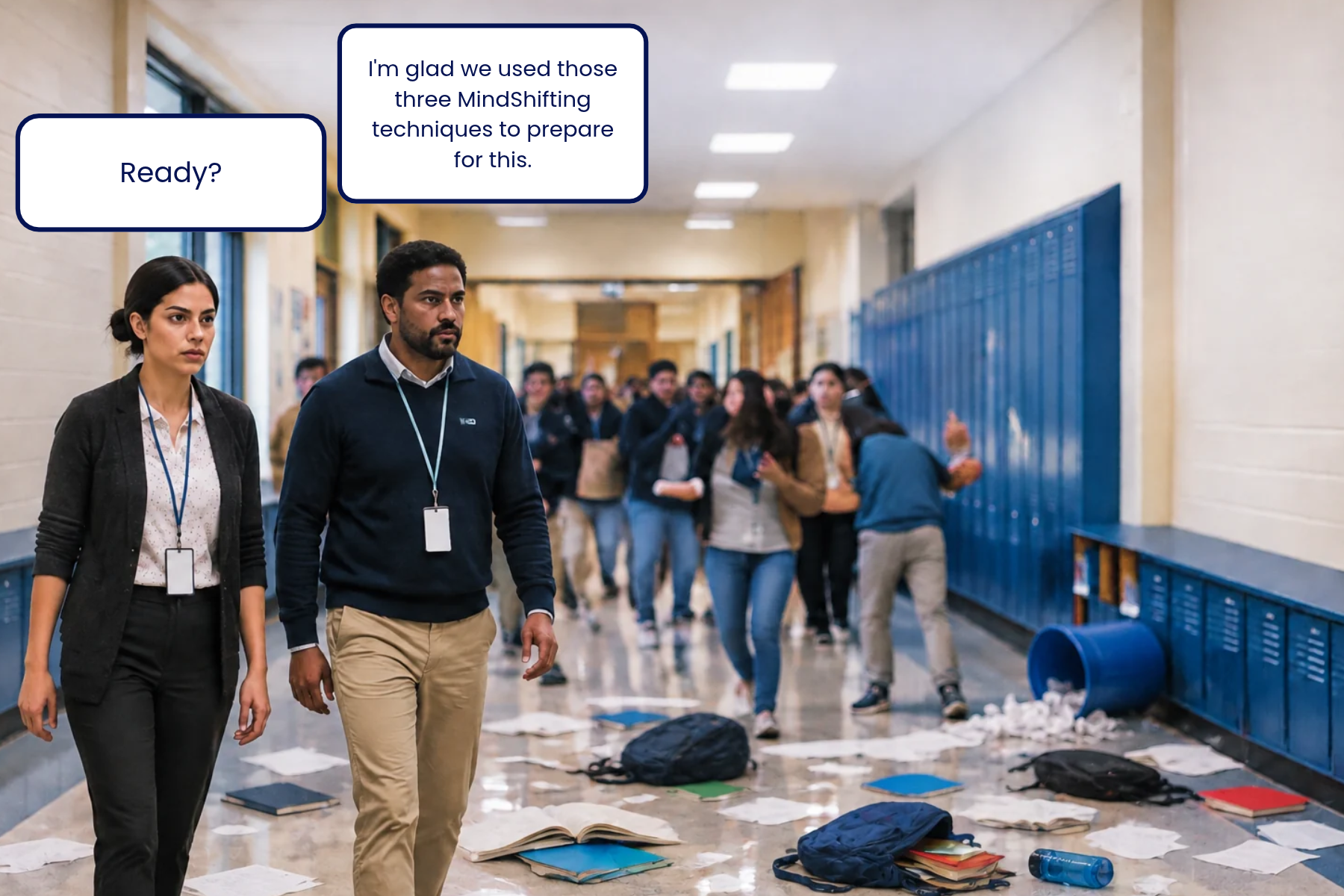
Three techniques, Premortems, Episodic Future Thinking, and Three Stories, help us explore possibilities we might otherwise overlook, anticipate challenges, and make more thoughtful decisions. They also build resilience by preparing us to respond and adapt when things don’t go as planned.
Here are three examples of educators using these techniques to approach familiar challenges differently.
1. Premortem: Discover What Could Go Wrong Before It Does
An educator asked herself, “What’s a way to improve student engagement and participation in my classroom”
The answer that came back: “giving students more choice in how they completed assignments would be better than what I am doing now.”
Instead of immediately implementing the idea, she conducted a premortem.
A premortem asks us to imagine that we’ve already tried something and it has failed. We then work backward to identify what might have caused the failure.
She identified several possibilities that might make that “better answer” fail. Students might feel overwhelmed by too many choices. Some might struggle with independence. Different assignment options might not provide equal opportunities to demonstrate learning. The approach might also require more preparation and classroom management than expected.
Imagining these outcomes helped her develop a more thoughtful intervention.
She decided she would start with just two or three assignment choices, establish clear expectations, observe students’ responses, and gather feedback.
But something else happened.
As she explained:
“It shifted my thinking from simply trying to increase student engagement to understanding what might be preventing students from engaging in the first place.”
By exploring what could go wrong, she gained a deeper understanding of the problem itself.
The MindShift: Instead of assuming an appealing solution will work, imagine why it might fail. You can discover weaknesses in your plan, uncover assumptions, and identify ways to improve your chances of success before committing significant resources.
2. Episodic Future Thinking: Connect Today’s Choices to Tomorrow’s Possibilities
Another educator asked, “What might help students on academic probation become more engaged and pass their classes?”
The answer she came up with was to have the students explore the lives they wanted to live using Episodic Future Thinking (EFT), a technique in which people vividly imagine specific experiences that might occur in their futures.
The premise is that when we can picture a future that matters to us, we may be better able to connect our present decisions to that future.
But she didn’t assume that answer would work for everyone.
She used a premortem to anticipate what could prevent EFT from being successful.
Some students might have difficulty imagining a positive future. Others might not engage with the exercises. Still others might face challenges outside school that interfere with their ability to follow through.
This led her to reconsider how she would use the strategy.
“I began to see EFT as a starting point rather than a complete answer.”
She proposed combining future-oriented reflection with regular goal-setting conversations, check-ins, and support to help students connect their academic work to their personal aspirations.
The technique also changed how she viewed the challenge. Instead of focusing only on getting students to pass their classes, she began considering how to help them envision what they wanted for themselves and develop the capacity to work toward it.
The MindShift: When making decisions, don’t focus exclusively on the immediate problem or consequences. Imagine specific possible futures, consider what matters in those futures, and work backward to identify choices that could move you toward them.
3. Three Stories: Explore Possibilities Before Choosing How to Respond
A speech-language pathologist who helps students develop interpersonal and problem-solving skills noticed that students were frustrated with this one peer who was constantly telling on others or trying to boss them around.
Instead of giving the children an answer, she tried a technique called Three Stories with them.
Together, they role-played the situation and imagined three possible stories:
- What might happen that would make the situation better?
- What might happen that would make the situation worse?
- What completely unexpected outcome might occur?
The third story was particularly enjoyable because it encouraged them to be creative and consider possibilities outside their usual expectations, like, “what if we put her on a swing and pushed it so hard that she went into outer space?”
But the most significant result was that the children became active participants in exploring the problem.
Rather than being told what to do, the children took their responses and rehearsed them, imagining how others might react, and reached their own conclusion about what felt right.
After going through that process, the educator observed:
“It is always better to have them express how something may play out versus telling them how it would play out, because honestly we do not know how.”
In complex situations, we cannot reliably predict how other people will respond. Considering multiple stories makes us less dependent on any one prediction and better prepared to adapt as circumstances change. Coaching children through this technique gives them ownership in imagining what they want to happen and crafting a solution that is likely to work.
The educator planned to extend the technique to more classroom situations, starting with everyday problems and eventually applying it to more complicated situations, including conflicts faced by characters in literature.
The MindShift: Instead of providing direct answers that assume you know how events will unfold and don’t give others the skills to solve their own problems, help them imagine several different possibilities—including an unexpected one. Exploring alternatives broadens your thinking, improves your judgment, and prepares you to respond more effectively to surprises.
Better Decisions Begin With Better Thinking
These three techniques approach decision-making from different directions.
A Premortem helps us anticipate what could go wrong.
Episodic Future Thinking helps us envision what we want to make possible.
Three Stories helps us consider multiple ways a situation could unfold.
None requires special equipment, advanced training, or extensive preparation. And none is limited to education.
We can use them when planning a project, navigating a difficult relationship, making a career decision, introducing a new initiative, or responding to an unexpected challenge.
Their value extends beyond the immediate decision. Each time we deliberately explore alternatives, challenge assumptions, or imagine possible futures, we practice becoming more resourceful and resilient.
One educator described the larger lesson this way:
“The goal is not always to find the perfect solution right away, but to develop a process for thinking critically and improving along the way.”
We cannot eliminate uncertainty, prevent every setback, or ensure that our decisions always produce the outcomes we want.
But we can change how we prepare, decide, and respond.
And that is a skill we can continue to develop throughout our lives.
Leave a Reply