A Bridge from Childhood to Adulthood
The idea was this: that all of the teachers, including the related arts teacher, they all plugged into a project. The teachers come together. They all look at the various standards they need to cover, and they find common threads, all centered around one project at a time.
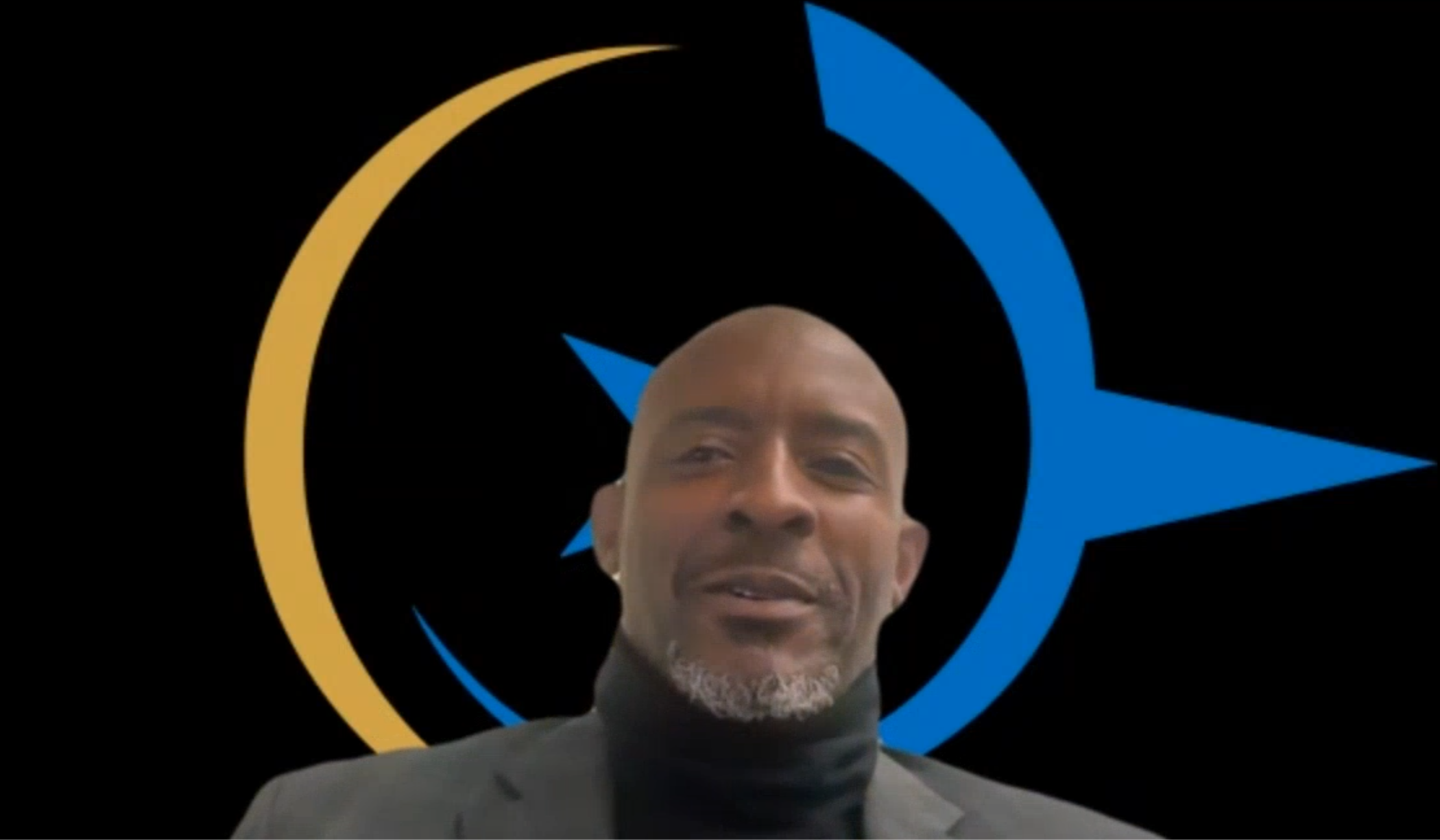
That’s how Victor Black described the approach he is building into a kindergarten-through-high-school public school pathway in Norwalk, teachers working together so students learn their respective subjects through an integrated project.
Not a project tacked onto the end of a unit. Not a separate assignment for every subject. Teachers plan together, identifying the academic standards their students need to master and connecting them through a shared project. Students learn the content while designing, creating, revising, and explaining something that matters to them.
Dr. Victor Black is Executive Director of the Magnet Schools Assistance Program (MSAP) for Norwalk Public Schools in Connecticut. A $15 million, five-year federal grant supports the work across Kendall College & Career Academy, Ponus Ridge STEAM Academy, and P-TECH Norwalk.
As Dr. Black elaborated, if we want education to prepare children to become adults, we need to construct environments that help them make that transition. Those environments must be child-friendly without keeping children dependent. They must offer safety, encouragement, and guidance while creating opportunities for responsibility, collaboration, judgment, and independence.
We need to and we can make those qualities part of how school operates.
Learning by doing, not doing after learning
Dr. Black emphasized that to really engage kids, the project is not dessert; it’s the whole meal.
Students don’t spend weeks absorbing information and then decorate a poster to demonstrate that they remember it. They begin developing their projects early, applying what they learn as they go.
There is still direct instruction. There are still quizzes, homework, and assessments. The difference is that these support a larger process in which students have something to figure out and create. The learning content appears when the students need it in order to progress forward along their project mission.
Teachers establish the learning goals and assessment criteria. Students have choices about how to demonstrate their understanding.
Dr. Black offered a hypothetical example: a student interested in mechanics might use a motor vehicle as an analogy for a cell, connecting its components to cellular structures. The project could incorporate scientific understanding, mathematical calculations, and a persuasive essay defending the student’s choices.
Each student project is different; students connect academic expectations to their own interests and explain those connections. At Kendall, Dr. Black described children experimenting with robotics, conducting interviews, and operating equipment for school productions.
As I put it during our conversation, in the real world an adult is likely to hear: “Here’s a problem. Take these three people and solve the problem.”
School should give children practice doing exactly that, scaffolded based on their academic, cognitive, and social development.
Give children real responsibility
The environment is gamified so that students have three levels of goals: progress through a badging system, learn the academics, and successfully complete their project.
Students earn badges identifying skills they have developed. Those skills can then become useful to someone else: children can help peers in another classroom learn what they need for a project.
This is more than recognition. It gives competence a purpose.
A child moves from “I completed the assignment” to “I know how to do something, and someone else needs my help.” That helps the child understand that they matter.
That is a meaningful step toward adulthood. It also changes a child’s relationship with school. Instead of being a place where adults continually judge what you lack, school can become a community where you discover what you can contribute.
Build the environment that makes independence possible
None of this works simply by telling children to take responsibility.
Dr. Black described greeting students and adults every morning, even when, initially, few greeted him back. He talked about after-school opportunities for children who need a welcoming place to be. And he described giving a child sent to the office time to decompress rather than immediately turning the encounter into punishment.
There are still expectations, rules, and consequences. But the purpose is to help children function within a community, not to make compliance the central experience of school.
That means adults must model the collaboration and respect they expect from students. That means recognizing that each child is a human being with agency, and that no one behaves perfectly all the time.
Children shouldn’t have to arrive as their best selves before educators are willing to serve them. A child-friendly environment isn’t one without challenges. It’s one where challenges come with support.
Support the adults, too
Interdisciplinary learning does not happen by fiat; teachers require time to plan together.
Dr. Black described reallocating responsibilities such as hallway and cafeteria supervision so teachers could collaborate. Administrators and other staff took on duties that otherwise consumed teachers’ time.
Professional learning is another foundation. At the time of our conversation, teachers had completed introductory project-based learning training, with more advanced training planned. Teacher leaders help build the internal capacity to support colleagues and bring newcomers into the approach.
Dr. Black is candid about the difficulty. Planning is demanding. Things don’t always turn out the way we wanted or planned. As I said to him, “We do the best we can based on what we know. And when we know more, we do the best we can based on what we know then.”
That applies to the adults as much as to the children.
Keep the destination in view
Dr. Black’s industry advisory committee brings educators, students, employers, and community representatives together. Students share projects; employers discuss which skills are relevant and where learning needs to evolve. Partnerships also create opportunities for internships, job shadowing, and professionals’ involvement in projects.
The destination isn’t a particular job title. It’s a young adult who can learn, adapt, collaborate, present ideas, and advocate for themselves.
Dr. Black wants graduates to be able to say, “I was fully prepared for what was ahead of me in this world.”
This is an example of education moving in the right direction: children supported as children while gaining the experience, confidence, and capabilities to become adults.

Leave a Reply