
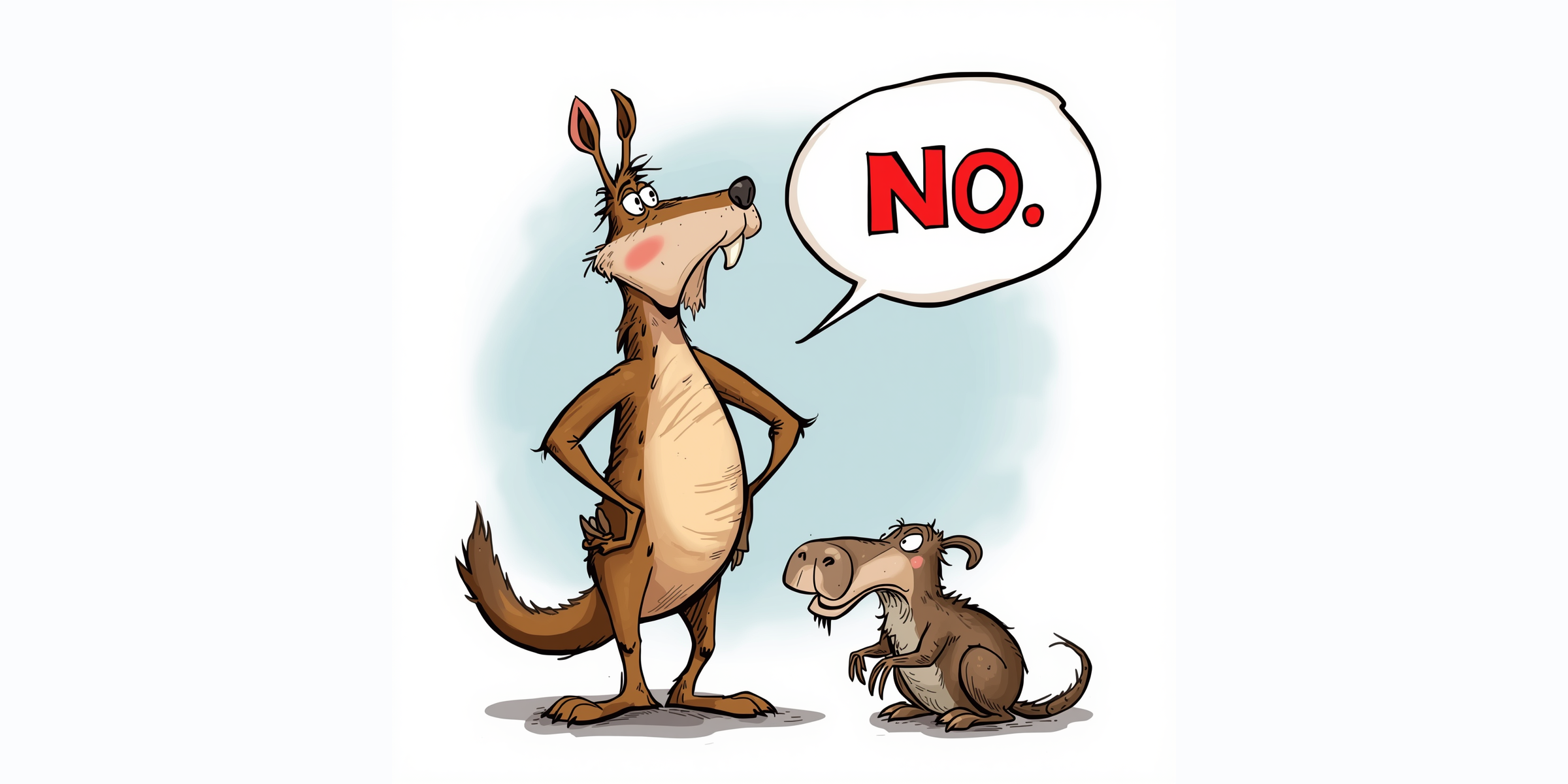
What do you do when you have a straightforward solution, and someone says no?
The solution has measurable benefits, virtually no cost, virtually no risk. You have cleared it with the higher ups who have asked you to work out the details with their designated functionary, perhaps someone in IT or the central office.
And in that meeting the functionary says, no.
Of course, the no is swaddled in reasons. You’ve heard them all.
It’s against our policy.
We have put a hold on new initiatives until we work through our existing ones.
Procedure is that this type of project has to be approved by me and you didn’t follow procedures properly and so I have no choice but to stop this project.
Until there is an independent blind study that proves that this is the best solution and will achieve the results that no one has ever been able to achieve before and the study has been peer reviewed we will not be able to proceed.
It is a security risk.
We already do something similar, we don’t need this.
You missed this decision cycle and the next cycle will start in eight months, apply then and make sure you fill out the forms correctly.
This person was reacting using their limbic brain; they made their decision instantly without having to think. Neuroscience has shown that the explanation comes after decisions like this. The problem is that once that part of the brain takes hold, no logic or argument is going to dislodge that decision.
My former business partner used to say, “That person has full no-saying power.” The person cannot necessarily exert authority to approve things, but they can demonstrate their power through saying no. Saying no moves them from impotent to important.
We’ve all run into those people. Bureaucracies are rife with individuals like that. It’s frustrating. We feel powerless. We feel angry. Which is pretty much what their goal is, right?
As humans we all react based on our survival or limbic brains. And our reaction, by default, is limbic as well; we follow scripts that do not require or even use resourceful brain power. These scripts stem from or generate our rationale, what we tell ourselves is the reason we make the decision. That rationale seems like “truth” or “reality”, but cognitive scientists call them stories, the stories we access.
Our most common reactions to this type of stress are
Fight:
- I don’t have to take this, I’m going to go over this person’s head
- I just need to tell this person the reasons and they will open up
- I’m going to tell this person what I think of them
Flight:
- Nothing I can do, a rule is a rule; this person’s decision is final. I’ll just move on to some other opportunity.
Freeze:
- Why do these things always happen to me? I should just give up.
- Maybe I should placate this person and eventually they will let me in.
Do you want to know what I did?
I wrote a reasoned email summarizing the functionary’s reasons for the rejection to my original contact, the person’s boss’s boss. We’d shown really great results in previous projects. I knew that the reasons the person gave were fake. The senior director had already given the project their approval. I knew that my contact, seeing the ridiculous false rationales would take action to open a way forward. Maybe they would even inflict a little pain on this self-serving underling.
I was really proud of the email, too.
But I didn’t send it.
I talked two friends who knew about the situation. I used mental focus to allow the adrenaline and cortisol to flush out of my brain. I waited until I felt calm when thinking about what I might do rather than anger about what the person said and ruled.
From a centered calm mindset, sending the email felt wrong. I couldn’t completely explain it, but it just felt wrong.
I think that’s one of the essences of the book MindShifting: Stop Your Brain from Sabotaging Your Happiness and Success.
If you want to generally make good decisions:
- Make sure you are in a state of calm, and if you’re not use your Self-Commander to get in that state.
- Focus on what you want to happen, not on what already happened
- Attach yourself to one of your five Sage powers (empathy, exploration, innovation, navigation, and focused action).
- From that power or mindset, come up with some alternatives
- Treat your feelings and intuition with respect.
- Choose what to do, and know that whatever happens, it’s probably not what you expect and that you should be prepared to adapt and adjust.
For those interested in reinforcing and refining these techniques, we are conducting a four-week free MindShifting Practice Lab on the book starting June 3. We will be live on Zoom. Please note, the Practice Lab assumes you are reading the book, and the Kindle edition is on sale fo $0.99 for the week before the lab.
Back to how I applied MindShifting to my situation.
From a calm mind, I know that only in very special circumstances are emails an effective method for resolving conflict. My certainty that the email would result in a favorable decision was more a limbic reaction than a resourceful conclusion.
But I never would have come to that conclusion if I’d made the decision from an anger-based state.
What did I do and what happened?
I knew that the senior director and I would be having a meeting in the next few weeks about something completely different. I decided to go ahead and schedule that meeting, and during that meeting I will bring up the objections that the functionary raised. I’ll get good feedback as to what direction to take based their responses. I’m already poised to take in the responses from a mindset of curiosity and exploration rather than judgment.
What do you think will happen?

Leave a Reply