
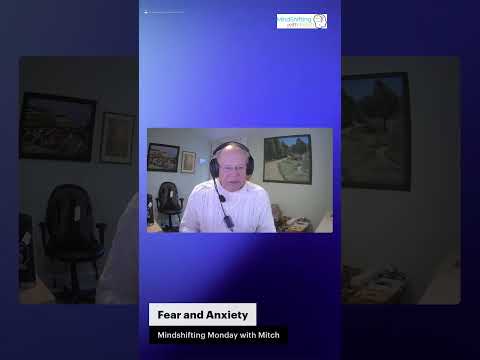
What I Learned Hosting My First Solo MindShifting Monday
Starting just a few weeks ago, every Monday, I go live on LinkedIn for MindShifting Mondays with Mitch—a weekly video series where I explore practical, research-backed approaches for shifting out of conflict, anxiety, and stuck mindsets, and into clarity, resilience, and collaboration.
The plan is that some weeks I am joined by a guest and other weeks I will fly solo and simply speak to the audience.
And I’ll be honest with you: this week was my first truly solo session…and I was nervous.
Sure, I’ve spoken at conferences, appeared as a guest on any number of podcasts, taught university courses, and led workshops—but sitting alone in front of a livestream camera without seeing the audience is an entirely different experience. I felt nervous, and I could feel the familiar sensations of anxiety bubbling up.
And because this series is about honest, usable MindShifting lessons, I decided not to hide my nervousness. Instead, I used the very techniques from my work (and from my newly released book MindShifting: Conflict and Collaboration) to walk myself through the process in real time.
So this week’s livestream became something more than a lesson about fear—it became a demonstration of what MindShifting looks like in practice, inside a very human moment.
Below is a recap of the session and the core takeaways, but if you want the full conversation—including the breathing exercise and the self-talk technique I used—you can watch the full replay at the end of this post.
Why Fear Feels So Immediate
Fear, anxiety, and anger all originate in the brain’s survival system—the limbic system—which works fast, automatically, and in binary terms. Something is either safe or dangerous.There’s no nuance. And there’s no time.
When the limbic system senses a threat, even a harmless one like “What if no one wants to listen to me speak for 30 minutes?” it floods the body with cortisol and adrenaline. We narrow our focus. We lose some of our capacity to problem-solve, absorb new information, or stay creative. This is why anxiety can make even simple tasks feel overwhelming.
The trick is not to bully ourselves into bravery—but to shift out of the survival mindset and back into a resourceful mindset where better thinking becomes possible.And, during this live event, the audience got to see me do just that.
The Technique I Used in Real Time
As I explain during the session, when I noticed those nerves rising, I used two foundational MindShifting tools:
1. Breathing as Disruption
Before we can think differently, we need to change the chemistry of the moment.
In the session, I guided everyone through a short breathing exercise:
- Listen to the sound of your breath coming in
- Listen to the sound of your breath going out
- Then shift attention to the physical sensation of your chest expanding and contracting
Just a few cycles of this is enough to move the brain out of fight-or-flight and into a calmer, more receptive state.
2. Evidence-Based Self-Talk
Not the typical “you’ve got this!” kind of pep talk.
MindShifting self-talk is structured questioning—a way to remind your brain of real evidence from your own life that disproves your fear.
I asked myself:
- Have I done difficult things before?
- How did I feel when I finished them?
- What helped me persist?
- What am I proud of?
By walking myself through past successes, my brain shifted from “I can’t do this” to “I’ve done harder things—and succeeded.”
And, importantly, this technique also includes future pacing:
When fear returns (and it will), how will I respond next time?
This turns confidence into something repeatable, not accidental.
Why This Matters for You
These tools aren’t just for livestream jitter, of course.
They’re incredibly useful when you’re:
- Asking for a raise
- Setting a boundary
- Having a difficult conversation
- Presenting an idea or making a request
- Taking a step that feels new, public, or vulnerable
Fear is human. But staying stuck in fear is optional.
When we pair calming techniques with structured questioning, we give ourselves (and others) a pathway out of anxiety and into capability.
A Free Resource to Help You Practice
During the livestream I also shared a free download: 50 Questions That Change Minds, taken directly from the new book. These questions are grouped into categories—building rapport, clarifying goals, uncovering misalignment, generating alternatives, and committing to next steps.
If you’re curious about the approach behind MindShifting, this PDF is a great way to explore it before (or alongside) the book.
Watch the Full Episode
In the replay, you’ll see the breathing exercise, the self-talk demonstration, a breakdown of how fear hijacks the brain, and a preview of upcoming topics.
👉 Watch the full MindShifting Monday episode here:
Join Me Live Every Week
If this conversation resonated, I’d love for you to join me live each Monday at noon Eastern for MindShifting Mondays with Mitch.
Some episodes will feature guests doing incredible work in psychology, communication, and coaching. Others—like this one—will be personal, practical explorations of real-world MindShifting challenges.
Next week, I’ll be speaking with Bridget Jones, who works with counselors and universities on identifying and shifting the mindsets that hold students (and even counselors themselves) back.
Until then—notice your thoughts, breathe deeply, and give yourself credit for every challenge you’ve already met.
See you next Monday.
— Mitch

Leave a Reply