Key Takeaways from an enlightening LinkedIn Live
Hello MindShifting community,
On Monday, I hosted my second ever LinkedIn Live, and I’m thrilled to share both the experience and insights that came out of it with you. LinkedIn Live is a new journey for me, one that I’ll be embarking on every Monday at 4pm EST (so be sure to swing by my Linkedin profile to tune in.)
My vision? To introduce the MindShifting framework to 5 million people worldwide, empowering each of us to stop our own brains from sabotaging our happiness and success.
This week’s conversation was particularly special because I got to welcome Jane Lyons as my guest. Jane is a lifelong educator, an extraordinary thinker, and close friend. She’s more than a guest. She’s been by my side co-teaching many MindShifting courses for educators. Her wisdom, warmth, and years of practical experience have been invaluable as we’ve helped thousands shift their mindsets in classrooms and beyond.
If you missed our session, the topic was: “Why do simple situations blow up?” Jane and I talked at a high level about the surprising ways in which everyday problems, especially the ones we think will be easy to solve, suddenly become overwhelmingly complicated.
It’s a subject close to my heart, because understanding these situations is the foundation of effective MindShifting.
Understanding Why Simple Situations Blow Up
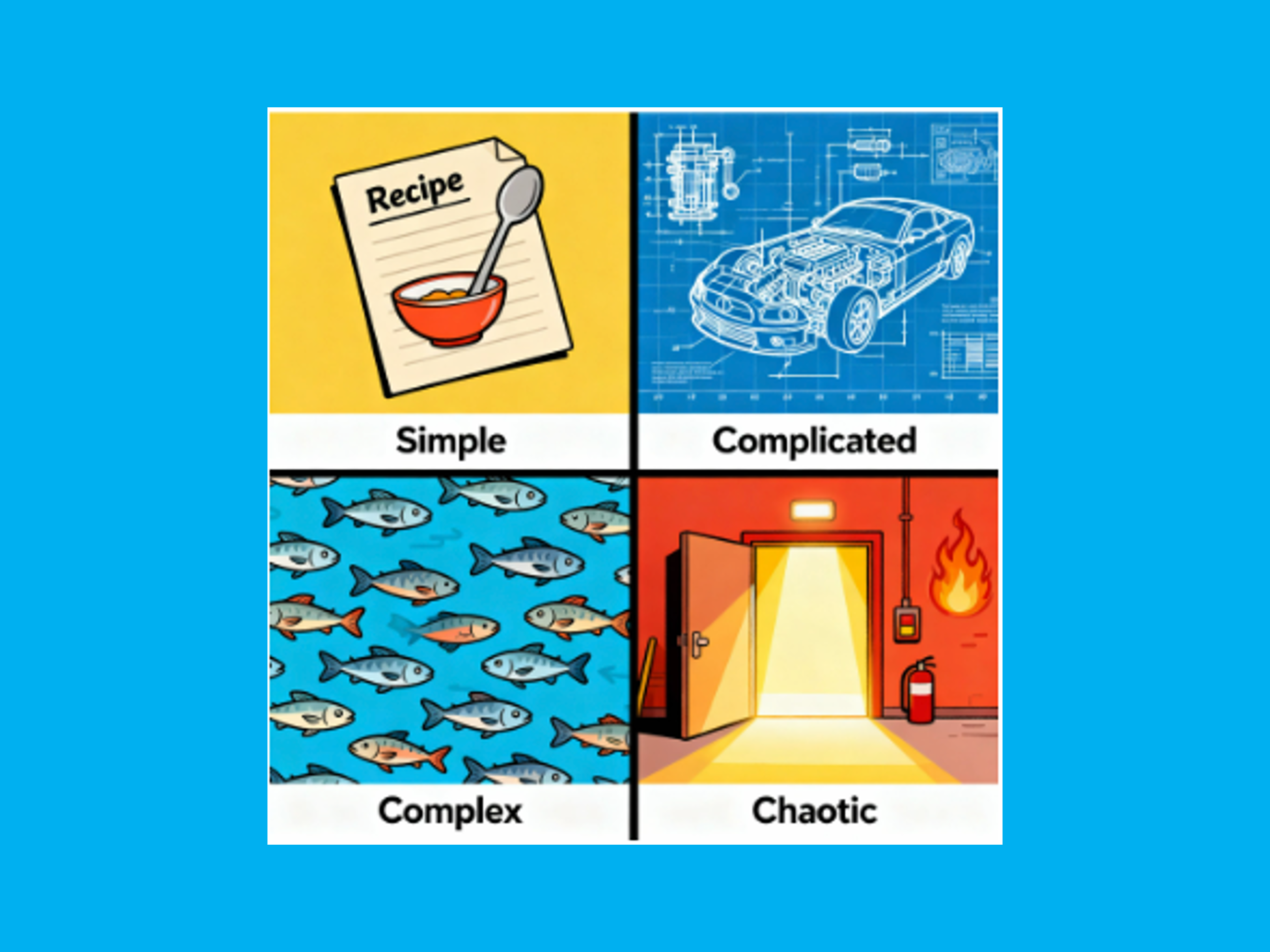
As Jane and I explored on the broadcast, not every situation we face in education (or in life) is created equal. They fall into four distinct categories, each requiring its own approach.
First, there are simple situations. These are the tasks where the steps are spelled out clearly, and following the instructions nearly guarantees a good result. Think about cooking with a tried-and-true recipe. If you measure the ingredients properly, follow the sequence, and keep an eye on the timer, you’re almost certain to end up with something tasty. These are the routines we lean on: tasks with a straight path from start to finish, no need for improvisation, just reliable, repeatable action.
Then we move to complicated situations. These are trickier. They might still be solvable with the right knowledge, but they require expertise, coordination, and careful execution. It’s a bit like repairing a car engine. If a car breaks down, there isn’t just one answer, but if you have access to a detailed manual or a skilled mechanic, you can systematically diagnose the problem and get things running again. In schools, these problems might involve revamping teaching materials or implementing a new technology platform, where the right plan and specialized input are essential.
Life, however, frequently hands us complex situations, where there are no definitive instructions – just many variables, many different people affected, and outcomes that emerge unpredictably. Improving school culture is a perfect example. It’s not about fixing one thing; it’s about shifting habits, attitudes, and relationships across the fabric of a school community. Success here isn’t found in a list of steps; it comes from experimentation, learning from small wins and setbacks, and being able to reflect, listen, and adapt as you go.
And finally, there are chaotic situations—the true curveballs that demand immediate action. When the fire alarm goes off in a school, for instance, there’s no time to analyze or debate. In that moment, your first priority is getting everyone to safety, following urgent protocols, and restoring stability as quickly as possible. Only once the chaos settles can you regroup, debrief, and plan for how to handle things even better next time.
Recognizing which kind of situation you’re facing is half the battle—and in MIndShifting we borrow concepts and techniques for resolving these situations from both the Cynefin framework and OODA loops..
The real trouble starts when we mix these up.
How many times have you (or I!) tried to solve a complex, people-driven issue as if it was as simple as following a recipe? Or wasted hours analyzing something that really needed a swift, decisive response? That’s when “simple situations” blow up—when our brain’s desire for quick fixes meets the messy reality of life.
Key Takeaways:
- Misidentifying Problems Escalates Them
Often, simple situations “blow up” because we treat complex or complicated challenges as if they are simple, assuming there’s a quick fix. This mismatch leads to frustration, miscommunication, and escalation. - People Make Problems Complex
The moment your situation involves people (think students, teachers, parents, coworkers) what seemed simple quickly morphs. Human behavior is unpredictable, context-dependent, and often emotional. - Right Tools for the Right Type
- Simple problems need rules and routines.
- Complicated problems benefit from analysis and expertise.
- Complex problems thrive on experimentation, resilience, and reflection.
- Chaotic (urgent) moments demand immediate action to restore stability before more thoughtful solutions can be implemented.
- Resilience is Core to MindShifting
Learning from mistakes, reflecting often, and adapting on the fly are hallmarks of real success. This mindset lets us grow through challenges instead of being overwhelmed by them.
Jane’s stories from the classroom brought these concepts to life. We talked about times when curriculum changes seemed simple—like teaching a new way to pronounce ‘Y’—but suddenly became complex when all stakeholders had to get on board, adapt, and problem-solve together.
Summarizing Strategies & Tactics for Each Type
- For simple situations, don’t overthink—just follow the process.
- For complicated scenarios, lean on experts and break tasks into steps.
- For complex challenges, be open to experimentation, use feedback as learning instead of judgment, and iterate until improvements stick.
- For moments of chaos, take fast, decisive action. Later, reflect and build preventative plans so future urgent situations are steadier.
An Invitation to Journey Further
As my LinkedIn Live journey grows, some episodes may be freewheeling conversations, while others will follow a more structured path. Either way, my goal is always to deliver practical value rooted in decades of real-world experience. LinkedIn Live lets us interact in real time, and I couldn’t be more enthusiastic about harnessing this platform for open dialogue and problem-solving.
Every Monday at 4pm EST, I’ll be live with new guests, insightful topics, and actionable strategies. Thank you for being part of this growing movement!
If you would like to watch the recorded episode, I have embedded it below.
Finally, as you likely already know, the MindShifting framework is about more than just surviving unpredictable situations—it’s about thriving as you learn, adapt, and succeed.
I am thrilled that you are willing to join me on this life-long journey, and I invite you to keep exploring with me.
With enthusiasm and gratitude,
Mitch Weisburgh

Leave a Reply