We’ve all been there: you read an article written by someone that seems to have the same ‘slant’ as you do and you think, “Finally! Someone who gets it.”
There’s a small thrill in seeing your worldview affirmed and you can actually feel your brain giving itself a high five.
What you might not have noticed is that the statistics in the article that support your premise are too good to be true. Maybe the characterizations of those opposed to your idea are cartoonish or completely out of context. Perhaps the lead photo was actually taken in a different location or time.
But because the article seems to agree with your position, you seem to miss all of that; in fact you dismiss critics of the article as prejudiced, thinking, “Maybe they aren’t completely lying, but they are certainly biased.”
Here’s the catch: that same mental mechanism that made the article feel so validating, and made it so easy to dismiss possible red flags, is also one of the biggest barriers to growth, understanding, and collaboration.
Digging deeper into this scenario, in his book May Contain Lies, Alex Edmans describes nine different ways articles, posts, and papers present conclusions as if they were true, scientifically validated, backed by experts, or derived by unassailable logic, but which distort the truth.
Most of these we could validate for ourselves with a few minutes of investigation. But we don’t. Because when the information supports our point of view, we accept it, and when it contradicts our conclusions, we usually discount or attack it.
It’s called confirmation bias, and it’s a cognitive shortcut that keeps us safe… and stuck.
Why Our Brains Do This
Our brains crave efficiency. Every second, they’re processing an overwhelming amount of information, so they build shortcuts; patterns of thinking that help us make sense of the world quickly.
Confirmation bias is one of those shortcuts. Instead of objectively evaluating every new piece of information, our brains look for data that supports what we already believe and ignore what doesn’t fit.
Let’s say I clean up the dishes from dinner six nights in a row, and on the seventh night, I leave a dirty pot on the stove.
My wife’s and my reactions are completely dependent on our mindsets.
- Since I believe that I am conscientious and just missed one pot one night, then the six “good” nights confirm that. And the one left pot? “Well…no one is perfect.”
- Since she believes I am consistently careless, then the six nights go unnoticed, and what she sees is that, as expected, I didn’t finish the job.
That’s only human nature. Both of us are using shortcuts that inform the stories we tell ourselves about that dirty pot, although in this case please let her know that I am clearly right.
It’s the mental equivalent of scrolling past the news that challenges us and clicking on what makes us nod in agreement.
An Old Habit
This bias has roots in survival. Our brains evolved to act fast to dangers. Life and death situations don’t leave time for critical thinking, innovative solutions, or reframing stories. The stories we believe allow us to rapidly make sense of situations with every little information so that we can fight or flee and stay alive.
Group pressures amplify these confirmation biases.
For most of human history, being part of a group that shared beliefs kept us safe. Disagreeing too often with the tribe could get you exiled — or worse. So, our brains evolved to favor belonging; what the group proposes, we accept.
Everyone else’s agreement just reinforces our decision to accept the group’s judgment. Once we accept that story or viewpoint, our brains unconsciously filter and distort information so that our beliefs are not contradicted.
In today’s world, though, that same instinct can blow up conflicts, making collaboration feel like a threat rather than an opportunity.
The Cost of Always Being Right
But when confirmation bias runs the show, disagreements are not opportunities to learn, they feel like personal attacks. Stress hormones flood the brain and “being right” takes precedence over possible collaboration.
We curate our news feeds, our social circles, even our professional teams to reinforce what we already think.
Over time, our world gets smaller, and our thinking more rigid. We stop asking questions because we already “know.”
In my work with MindShifting, I’ve seen how this dynamic plays out in organizations. Teams divided by confirmation bias struggle to innovate. Leaders surrounded by agreement lose touch with reality. And individuals who can’t question their assumptions can’t adapt.
The irony is, we think we’re protecting ourselves from error — when what we’re really doing is protecting ourselves from insight.
Curiosity: The Antidote
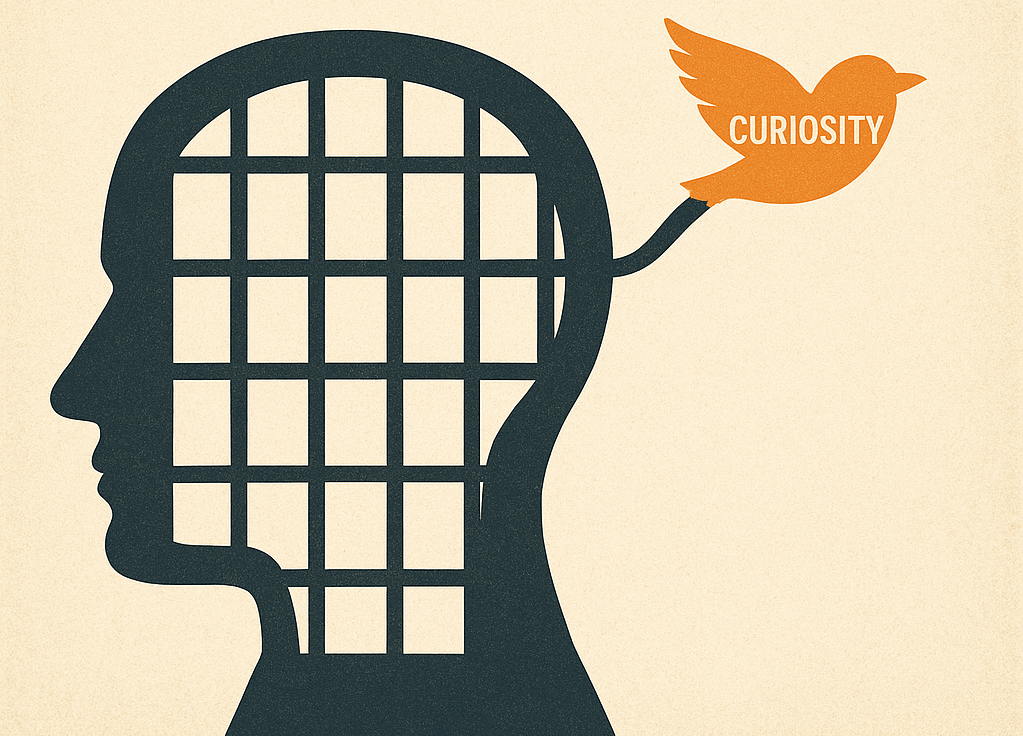
The good news is that confirmation bias isn’t a life sentence. The antidote is simple, though not easy: self-awareness and then curiosity.
Self-awareness is the realization that we are human beings, and may be reacting based on our confirmation bias. Curiosity invites us to pause the instinct to defend and instead ask, “What might I be missing?”
That single question shifts our mindset from certainty to exploration. It allows space for multiple truths to coexist and for learning to replace judgment.
To practice MIndShifting, to move into learning and collaboration mode, when you notice yourself resisting a new idea, that’s your cue to get curious about the resistance itself. What belief is being threatened? What story are you trying to protect?
It’s not about abandoning what you believe; it’s about understanding why you believe it — and whether it’s still serving you.
Breaking the Cycle
So, how do we practice this in real life?
Start small. The next time someone disagrees with you, instead of thinking, “That is obviously wrong.” try, “What might they be seeing that I am missing?”
Ask one more question before you offer your opinion. Read one article from a source you’d normally avoid.
And most importantly, when you feel that spark of defensiveness – that urge to prove your point – recognize it as your brain doing what it’s designed to do, deciding quickly and ignoring data that contradicts what it has already decided. Then thank it… and keep listening.
Breaking confirmation bias doesn’t mean surrendering your convictions; it means expanding your perspective. The moment you trade being right for being curious, you open a door to genuine understanding — and maybe even a little peace.
From Certainty to Connection
Finally, it is important to understand that breaking free from confirmation bias isn’t just an intellectual exercise — it’s an act of connection.
When we approach disagreements with curiosity instead of defensiveness, we shift from conflict against each other to collaboration with each other. That doesn’t mean we’ll always agree; curiosity often raises more questions than it answers. But it turns every exchange into a chance to learn rather than to win.
At its heart, MindShifting is about this very transformation — from protecting our beliefs to exploring new possibilities. Each time we notice our minds looping back to the comfort of “being right,” we have the option to pause and ask: What could I learn here? That single shift — from certainty to curiosity — is what opens the door to collaboration, creativity, and growth.
The essence of Conflict and Collaboration: MindShifting with Mitch (Volume 3) is how to transform opposition into opportunity, and how curiosity can turn tension into understanding. Because in the end, curiosity doesn’t replace conviction, it replaces reactions based on our survival instincts into responses that align with our highest values.
Next time you read an article or post that validates your point of view, question how it, too, is biased; maybe even use your curiosity to search out one that presents an opposite viewpoint.
And maybe it wasn’t six times in a row that I did the dishes perfectly, perhaps I am a little careless sometimes when cleaning the kitchen.
I’m going to go back and reread the book.

Leave a Reply