
Resilience is not grit, it’s more powerful and longer lasting
Many of us have a misconception that resilience is what we need when things start to go wrong. We steel ourselves, straighten our backbone, focus our attention and move forward. That’s grit.
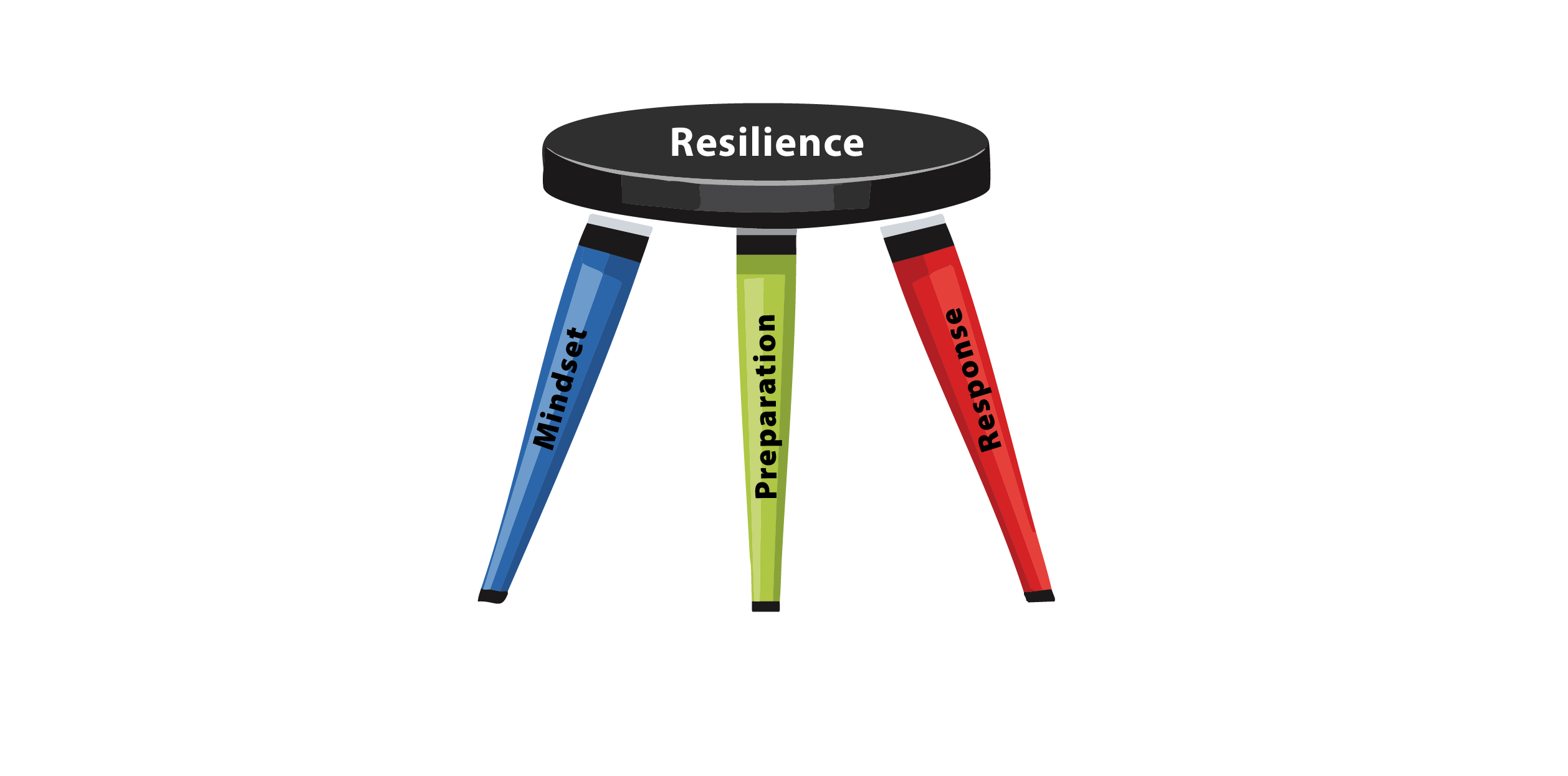
Resilience begins way before the situation that goes wrong. It starts with mindset, then preparation, then response.
Resilient Mindset
Most of us, when we perceive a problem or even an opportunity, find or look for a solution. Once we determine the solution, then it’s clear that anyone who disagrees with that solution or advocates for a different approach is wrong. If they can be convinced, either through logic, facts, rewards, or punishment, good for them. If they can’t be convinced, they are pigheaded, illogical, and maybe even deplorable.
Our expectation is that we deploy our solution, it solves the problem, and we move on. If it doesn’t solve the problem, then someone is to blame or we had bad luck, or maybe we just have to buckle down and do it harder.
The resilient mindset is the exact opposite. The resilient mindset is that whatever the problem, we aren’t sure of what is going to work. We are in a much better solution working with others with different viewpoints and backgrounds so that our actions are based on a more rounded perception of the situation. And in all likelihood, whatever we do isn’t going to completely resolve the situation, so we have to prepare.
Resilient Preparation
Resilient preparation assumes that our prepared plan is virtually worthless. “Everyone has a plan ‘till they get punched in the fact,” as Mike Tyson is credited with saying. That doesn’t mean planning is worthless, but it does change the purpose of planning.
The purpose of planning is to develop possible actions, to predict the most likely results, to anticipate what might go wrong, and to develop a way to observe both how we are performing and the results so that we can decide on our next actions quickly and effectively.
During planning, we take in information from the environment, from different sources. We analyze that information and relate it to what has been done before, and we devise possible new actions, then we try to figure out what might go wrong, how we can expect the unexpected and we prepare the actions we think might work to counteract those, we practice responding to different situations, and we determine how we will observe and evaluate the results of what we do.
We act, and planning prepares us to respond.
Resilient Response
When we act from a MindShifted mind, we act with the expectation that this action is merely one of many steps toward our goals. We are curious; we want to find out how we will reevaluate and respond appropriately to whatever happens. The resilient response stems from our resilient mindset and our resilient preparation: we are already armed with possible responses and we feel curious and playful instead of judgmental.
When we feel resilient, we act, replan, and respond with what Mihaly Csikszentmihalyi would call flow, and what Chamine Shirzad would call a Jedi Mindset.
Resilience versus Grit
If our goal were to climb a hill, we wouldn’t judge ourselves a failure after the first step didn’t reach our goals. Imagine the effort if each step of the way we gritted it out, saying to ourselves, “I failed but I’ll try one more step.” “I failed again, but I am going to try one more step.” “I may keep failing, but I’m going to take another step.”
Resilience is understanding that there will be multiple steps. The path might change course, there might be challenging obstacles, but we are going to have fun along the way and feel great when we reach the top. Grit makes us feel like we are performing a chore, resilience makes us feel as if we are playing a game.
Resilience is taught in the course MindShifting: Flexible Mindsets for Long Term success. You can see when the next class takes place, along with a description, here.

Leave a Reply