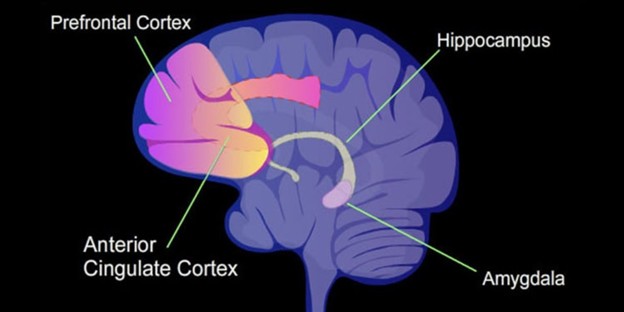
The areas of the brain involved in learning, resourcefulness, critical thinking, and creativity are
- The prefrontal cortex for executive function, attention, decision-making, problem solving, analysis, and working memory. It helps students pay attention in class, follow instructions, analyze information, and make connections between new and old knowledge.
- The hippocampus for formation and consolidation of new memories, and for recall from long term memory.
- The amygdala, responsible for emotions, where positive emotions promote engagement and learning.
- The anterior cingulate cortex provides the emotional context for retrieved memories (is this scary, painful, joyful, helpful) so much of the good/bad judgment takes place here and then gets passed to the amygdala. The ACC can be activated by the prefrontal cortex to suppress limbic system response, and the more often any person exercises calming techniques such as distraction, distancing, and self-awareness the stronger the response from the ACC towards the amygdala.
When stressed, the amygdala is what registers the negative emotions, including fear and anxiety, and then signals the other parts of the limbic and endocrine systems to release the stress hormones cortisol and adrenaline which shut down the abilities of the prefrontal cortex and hippocampus to take in new information, to be resourceful, to collaborate, to think critically, and to form long term memories.
When we are playful or curious, the ACC and amygdala signal the endocrine system to release the “happy” hormones. Dopamine signals the brain that something is pleasurable and worth remembering, Serotonin increases a focused frame of mind for longer periods, Oxytocin increases bonding and social connection and enhances the formation of new neural connections, especially in the hippocampus, which is used for long term memories. Endorphins improve mood and enhance the sense of well-being, and they alleviate all types of pain, which is essentially what happens when we are in a sense of flow, we are oblivious to time, effort, and pain.
These four hormones, Dopamine, Oxytocin, Serotonin, and Endorphins are sometimes referred to as DOSE.
Have you had your DOSE today? Be happy and learn more.
—
About MindShifting with Mitch Weisburgh
MindShifting is transforming how individuals, teams, and organizations unlock their full potential—whether in the classroom, the boardroom, or personal growth journeys. Developed by educator, author, and thought leader Mitch Weisburgh, MindShifting combines the latest insights from psychology, neuroscience, and practical experience to help people overcome barriers, shift mindsets, and achieve lasting results.
Through his writing, keynote talks, and engaging workshops, Mitch empowers educators, corporate teams, and life coaches to embrace new ways of thinking and problem-solving. His unique MindShifting framework provides practical tools for building resilience, resourcefulness, and collaborative skills that drive real-world change.
To continue your exploration of MindShifting, visit www.mindshiftingwithmitch.com.

Leave a Reply