What could we learn from an organization that lives every day at the intersection of education, mental health, and trauma‑responsive practice—the very place where most districts are now struggling.
If you talk with superintendents, principals, and teachers anywhere in the country, you’ll hear a familiar list of challenges:
- Escalating student mental health needs
- Behavior incidents that pull staff time away from instruction
- Chronic staff stress and burnout
- Pressure to show measurable gains in academic outcomes while also “doing SEL”
We’ve added technology, adopted new curricula, and layered on initiatives. Yet too often, the daily reality in classrooms hasn’t fundamentally improved for students or adults.
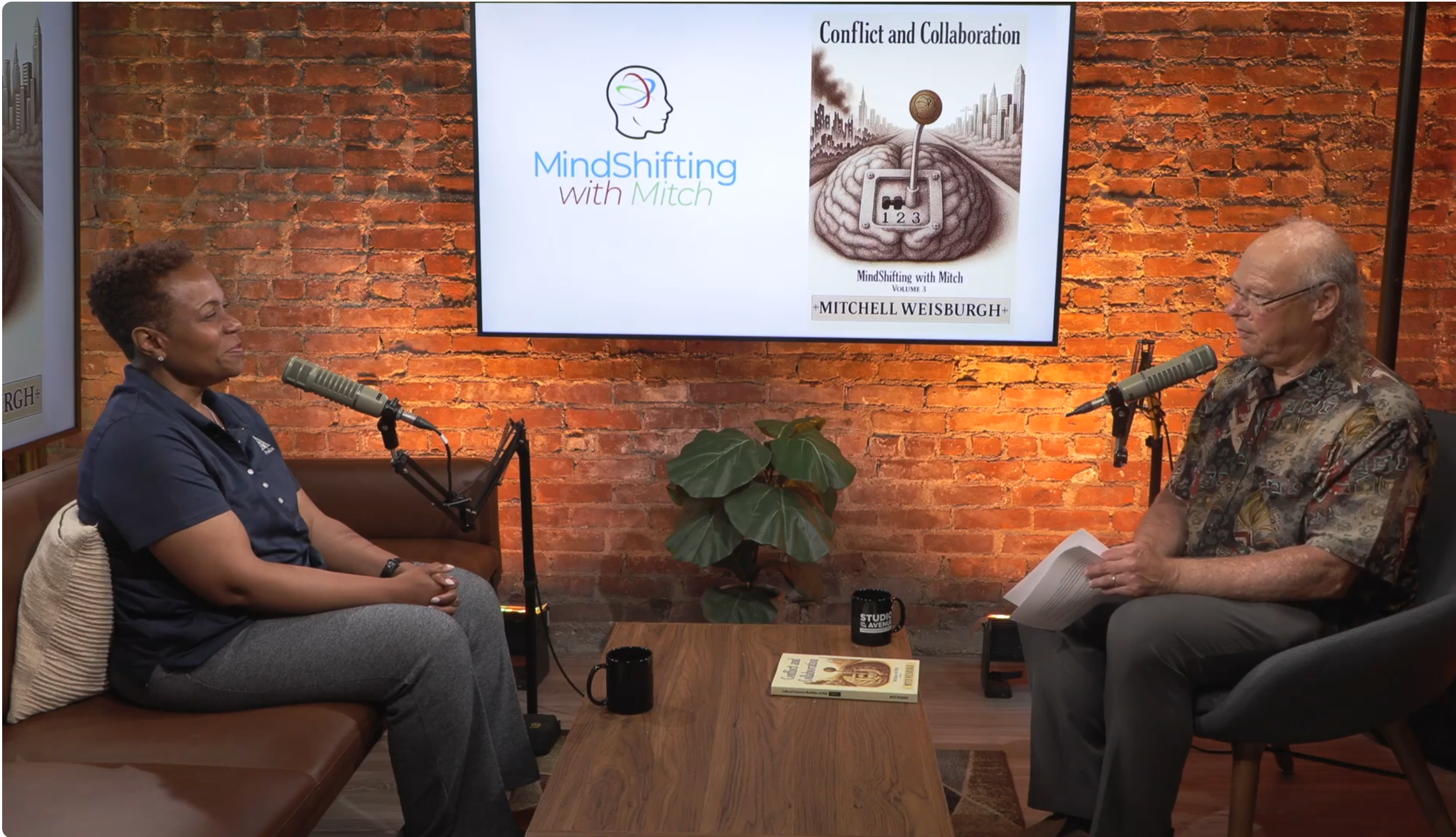
In my work on MindShifting, I’ve focused on how people—both students and educators—can navigate difficulty, regulate themselves, and stay resourceful even in high‑stress situations. Recently, I had a conversation on MindShifting with Mitch with someone who is putting these ideas into practice at scale: Dr. Corine Lurry‑Mabin, CEO of Andrus.
Who Is Dr. Corine Lurry‑Mabin, and What Is Andrus?
Dr. Lurry‑Mabin has spent 29 years at Andrus, a nonprofit organization in Yonkers, New York, dedicated to the social‑emotional well‑being of children, families, and communities. She’s worked across campus operations, community programs, and mental health initiatives, and she holds a PhD in marriage and family therapy.
Andrus runs community programs, two mental health clinics, and school‑based services in roughly 27 schools across Westchester County, NY. They provide support, coaching, and professional development for educators and social workers throughout the US. Plus Andrus operates the Orchard School, a K–9 day and residential program serving students with trauma histories, mood and behavior dysregulation, anxiety, and neurodivergence.
How Andrus Is Tackling Today’s Challenges Differently
Several elements of Andrus’s approach are especially relevant for district and school leaders—and closely aligned with the ideas in MindShifting.
1. Food, Movement, and the Brain
In education, we talk a lot about SEL, yet we rarely look at the links between the body, mental health, and inappropriate behavior. At Andrus, they’re building an enhanced One Health framework that connects:
- Food and nutrition
- Movement and physical activity
- Environment and nature
- Mental health and behavior
This isn’t just theory. A narrative review in Nutrition Research Reviews on nutrition interventions for university students found that relatively simple changes in diet quality—such as increasing fruits and vegetables and reducing highly processed foods—are associated with better mood, reduced stress, and improved concentration and academic performance over time (article link). There is growing acknowledgment that whole nutrient-dense food is medicine.
Studies reinforce what Andrus is seeing with children and adolescents: when you support the gut–brain connection with healthier food and regular movement, students become more available for learning and less likely to escalate. For system leaders, that raises an important question: How much of what we call “behavior” is actually biology in a nutritionally deficient environment?
MindShifting teaches educators the science of stress hormones, the limbic system, and regulation. We explore how cortisol, adrenaline, and an activated amygdala narrow thinking and trigger survival behaviors—and how simple regulation strategies (breathing, movement, reframing) can bring the prefrontal cortex back online. Andrus’s One Health work is the systems‑level counterpart to that same science: changing conditions so students’ brains are physiologically more capable of learning and self‑control.
2. Behavior as Communication, Not Defiance
Andrus uses the Sanctuary Model as its operating framework. Staff are trained to view behavior as communication—data about what a student is experiencing—rather than as willful defiance.
Is yelling in class just bad behavior that needs to be punished? Is the student overwhelmed without other mechanisms to cope? Is there some perceived or real threat and the student is not able to access the resources to calm down? Is your reaction triggered and you also need to reset?
That mindset shift leads to practices like:
- Responding with curiosity instead of judgment: “What’s happening for this child?”
- Recognizing that adults get triggered too, and using “tap‑outs” so a more regulated adult can step in before a situation escalates.
- Designing the environment as a healing space—from the presence of animals and nature to the way routines are structured.
This is not about being “soft.” It’s about understanding how stress and trauma wire the brain, utilizing practices with long-term positive results, and then organizing schools so adults can work with that reality instead of fighting it.
MindShifting includes trauma‑aware responses and approaches to behavior that go beyond stop‑gap punishments. Instead of asking, “How do I make this student stop?” we teach adults to ask, “What need is this behavior meeting, and how can we address the root cause?” Tools from the course and book Conflict and Collaboration—like shifting from blame to curiosity, separating impact from intent, and using non‑judgmental language—prepare educators to see through the behavior into what the behavior is communicating, facilitating long-term behavioral change.
3. Healing Happens in Community
Andrus doesn’t just serve “the identified student.” They intentionally support families and caregivers—helping them seek help, give themselves grace, and find practical ways to regulate themselves and their children.
They also emphasize that every adult in a child’s environment can be a healing agent: teachers, bus drivers, aides, office staff, coaches. For districts, that suggests we need to move beyond one‑off PD days and start building whole‑system cultures that support healing, not just compliance.
One example from MindShifting explores the power of social groups and social learning—how norms, group identity, and modeling drive behavior more than rules and lectures do. We look at how to intentionally shape group culture so the “default” behaviors in a school are curiosity, support, and collaboration. Andrus’s belief that healing happens in community is exactly this principle in action: changing the social environment so healthier patterns become contagious.
4. Adults as the Leverage Point
Everything Andrus does ultimately comes back to how adults think, feel, and respond. Their Sanctuary training, One Health work, and family supports are all designed to help adults:
- Understand their own triggers
- Practice self‑regulation
- Use shared language and routines
- Create predictable, safe environments for kids
For superintendents and principals, this reframes improvement work: the most powerful lever isn’t another student‑facing program, but how we develop our adults.
MindShiftingcourses and books give teachers and leaders shared tools for conflict, communication, and decision‑making, so they can respond more consistently under stress. When you layer those tools onto an organizational approach like Andrus’s, you get a coherent system: the structure supports adults, and adults have the mindset and skills to use that structure well.
How to Learn More or Partner with Andrus
If you’re a superintendent, principal, or district leader looking for support to:
- Build trauma‑responsive schools
- Integrate mental health, SEL, and academics
- Move from “managing behavior” to creating healing environments
Andrus can help—both through their Sanctuary Institute training and their broader organizational expertise.
You can:
- Visit their website: andrus1928.org
- Call their main line: 914‑965‑3700
- Ask to connect with their advancement or Sanctuary Institute teams to explore training, consultation, or partnerships.
We’re at a moment in education where doing “more of the same” is not an option. Organizations like Andrus show that when we align mindset, environment, and practice, we can build schools where students—and adults—actually heal and thrive.


Leave a Reply