
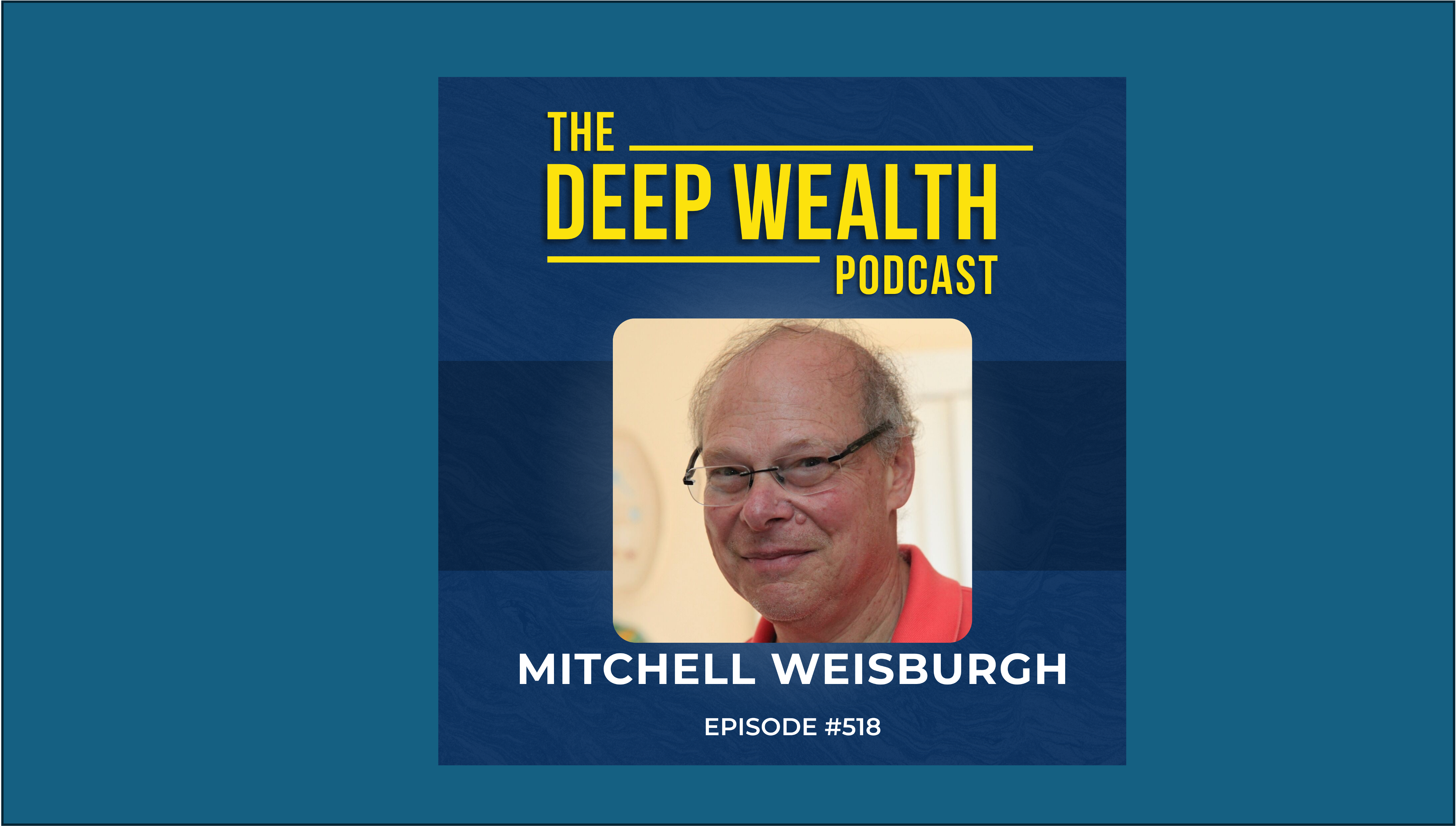
Not long ago, I had a fascinating conversation with Jeffrey Feldberg on the Deep Wealth Podcast about mind shifting, leadership, and the deeper forces behind sustainable success. It was a thoughtful, generous dialogue, and I’m deeply appreciative of Jeffrey for the depth of his questions and the space he created for this discussion.
Over the course of the episode, we explored why so many high performers find themselves stuck in the same patterns, the neuroscience behind our “survival brain” and our resourceful brain, and how leaders can navigate conflict, feedback, and tough decisions without burning themselves out or everyone around them. We also talked about real stories from my own journey—wins, failures, and expensive lessons that eventually became the MindShifting framework I teach today.
If this kind of conversation resonates with you, I invite you to watch the full episode in the video at the end of this post. There’s a lot in there that can’t be captured in a short article.
That said, there were two parts of the conversation that I believe are especially worth unpacking a bit more here:
- The 80/20 pattern I see again and again in entrepreneurs’ decision making.
- How “grinding it out” and extreme grit often signal a limbic reaction—and what to do instead.
The 80/20 Pattern in Entrepreneurial Decisions
When I work with entrepreneurs and founders, I see a recurring pattern: about 80% of their recurring challenges come from the same 20% of behaviors and thinking habits. One of the most common habits is a kind of absolute certainty that “this is the only way” or “this is what has to happen now.”
On the surface, that certainty looks like confidence and decisiveness. Underneath, it is often a sign that the decision is being driven by the limbic or survival brain. The limbic brain is binary: right/wrong, safe/dangerous, win/lose. It reacts in fractions of a second, is incredibly useful in true emergencies, and it absolutely has its place. But when every strategic decision is made from that place, the options narrow and the cost of mistakes grows.
In the podcast, I shared a simple practice: when you notice that feeling of absolute certainty—“I just know this is what we must do”—treat it as a cue, not a conclusion. That cue says, “my survival brain has taken the wheel.” The next step is to calm that system down and deliberately generate at least three alternative options for what you could do. Data shows that decisions made from three or more alternatives tend to be substantially better than those made from just one or two. In practice, what you ultimately choose is often not your original idea or any single alternative, but a mashup that combines the best elements of each.
For entrepreneurs, building this habit—pausing, naming “this is a limbic reaction,” and then expanding the option set—can dramatically change outcomes. Instead of reflexively doubling down on the first idea that pops into your head, you create a small but powerful gap where your resourceful brain can come online: the part that is capable of nuance, creativity, empathy, and alignment with your long-term goals.
When “Grinding It Out” Becomes a Red Flag
Another theme Jeffrey and I explored is the entrepreneurial love affair with “grit” and “grinding it out.” Many of us are proud of our ability to push through, to outwork the problem, to keep going no matter what. There’s value in that, but there’s also a hidden cost.
In the episode, I pointed out that when you catch yourself thinking, “I just have to grind this out,” that phrase is often a telltale sign that you are in limbic mode. Grit feels necessary when some part of you is quietly saying, “this might not be the right path”, but another part is declaring, “I’m going to force it anyway.” All your energy goes into pushing the boulder up the hill, and none of it goes into asking whether you’re even on the right hill.
The resourceful move is not to abandon grit, but to put it in the right place in the sequence. Before you grind, pause. Ask:
- What do I really want?
- What are three different ways I could approach this?
- What would this look like if it were easy or more elegant?
- Who or what could help, instead of me muscling through alone?
Sometimes the answer will still be, “yes, I do need to push hard.” But many times, you’ll see alternatives: delegating, redesigning the process, letting a non-critical issue resolve over time, or reframing the problem so the solution is less costly. The key is that grit becomes a conscious choice made from a resourceful state, not an automatic limbic reaction that quietly drains your time, health, and relationships.
Watch the Full Conversation
These are just two threads from a much richer conversation with Jeff. I encourage you to watch the full episode below and reflect on where your own decisions may be driven by survival patterns versus your most resourceful self.
If you’d like to learn more about introducing MindShifting into your daily life, I invite you to visit www.mindshiftingwithmitch.com. There you’ll find resources, programs, and next steps to help you move from reactivity to intentional, aligned action in your business and beyond.

Leave a Reply