
My dumb reaction moment
We’ve all had those moments where we look back and think, “What on earth was I thinking?”
For me, one of those moments came on a wine trip to Oregon with my wife. At each winery, the staff cheerfully offered, “Mr. Weisburgh, we can give you a 10–15% discount if you join our wine club.” Without truly pausing to think, I signed up. Not once. Not twice. Four or five times. Each club sent 12–24 bottles a year—on top of the wine we were already buying at each stop.
If I’d paused for even a few seconds, I would have realized: we don’t drink that much wine, we don’t need that much wine, and I certainly didn’t need four or five recurring shipments. That’s a classic example of what I call a “smart person, dumb reaction.”
Although I do realilze the “smart person” part of that might be open to conjecture.
Why do dumb reactions happen?
In Episode 5 of MindShifting with Mitch on LMC Media, I step back from interviewing guests and instead walk through the foundations of MindShifting itself—what it is, why it’s so powerful, and how it helps us avoid those “Oregon wine” moments in our own lives.
At the heart of MindShifting is the tension between two parts of our brain:
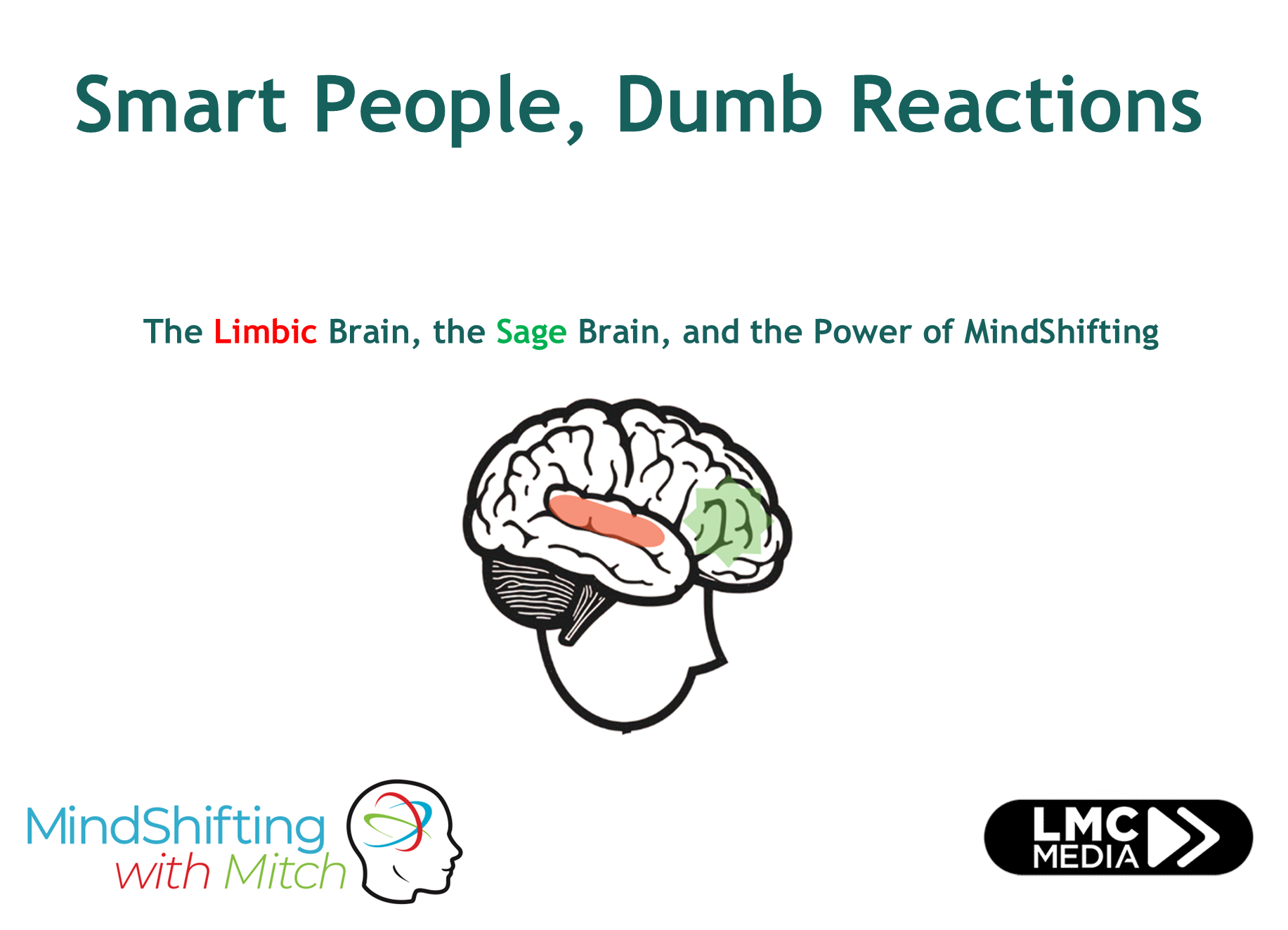
- The limbic system – fast, emotional, survival-focused. It reacts in about 2/100ths of a second, triggering fight, flight, freeze, automatic habits, following the crowd, and what many people—especially women—have helped me name as a sixth reaction: fawning (automatically agreeing or pleasing to stay “safe”).
- The prefrontal cortex – slower, thoughtful, creative, and empathetic. This is where we access critical thinking, emotional regulation, connection, and our ability to align actions with our values.
The problem is that the limbic system usually fires first. It decides what we’re going to do, then turns to the prefrontal cortex and essentially says, “Okay, now justify this for me.” That’s how we end up with impulsive purchases, defensive arguments, and rigid, black‑and‑white thinking.
What is survival brain actually like?
In the episode, I talk about how limbic-driven decisions tend to be:
- Binary – right/wrong, with me/against me
- Threat-based – feeling attacked or judged very easily
- Closed to new information – especially anything that contradicts what we’ve already decided (hello, confirmation bias)
MindShifting is about learning to catch those reactions and shift into what I call our “Sage mind” in the prefrontal cortex. Drawing on work like Positive Intelligence, I walk through five Sage powers:
- Empathy – for others and for yourself
- Exploration – approaching situations with curiosity instead of blame
- Innovation – co-creating new possibilities instead of shutting each other down with “Yes, but…”
- Navigation – aligning choices to your deeper values (like not bringing home yet another bottle of wine…)
- Focused action – taking steps, learning from feedback, and adjusting rather than giving up or blaming
What do we want to happen?
Ultimately, MindShifting is about transforming conflict into collaboration—moving from “one of us has to win and the other has to lose” to “what do we share, and how can we both win?”
If these ideas resonate with you—or if you’ve ever looked at a decision and thought, “That was my Oregon wine moment”—I invite you to watch Episode 5 of MindShifting with Mitch on LMC Media, where I unpack these concepts in more detail.
And a huge thank you to LMC Media for offering the MindShifting with Mitch show and giving us a platform to explore the mindsets that help us stop sabotaging ourselves and start creating better outcomes together.

Leave a Reply