
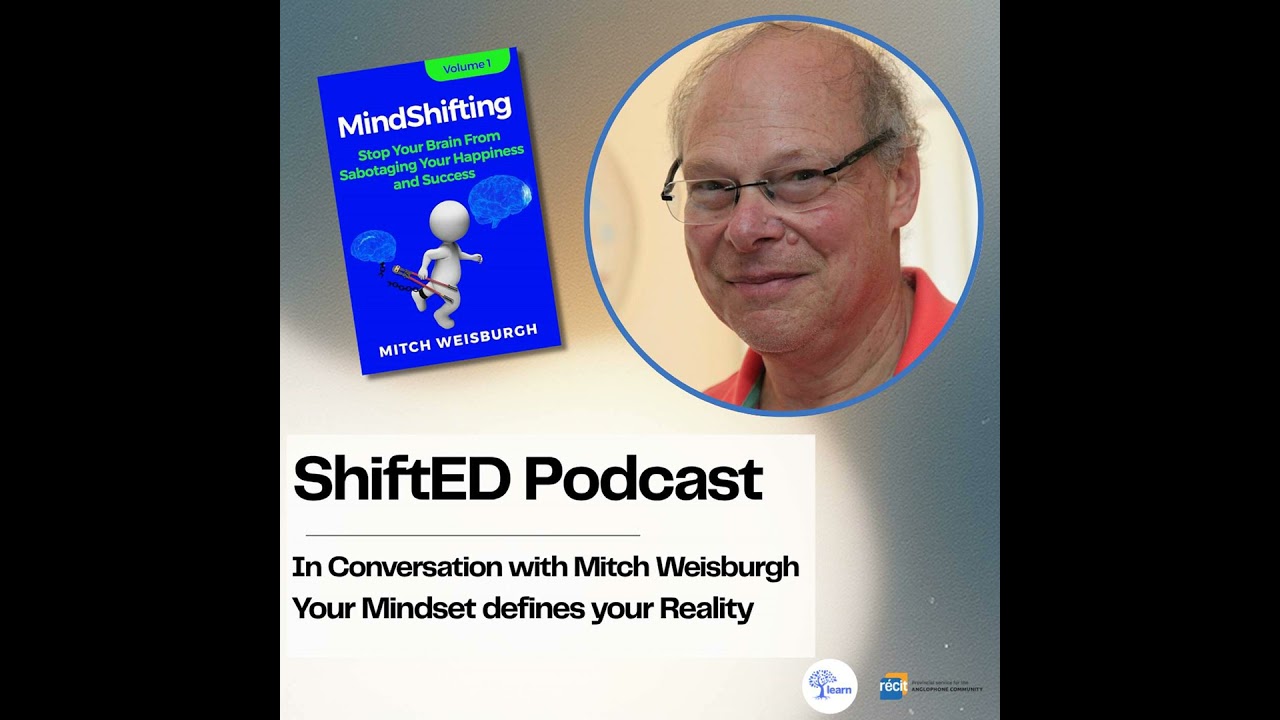
Mindshifting Lessons from ShiftED Podcast
Not long ago, I joined Chris Colley for a spirited exchange on the ShiftED Podcast – one that sparked fresh insights.
It’s always energizing to connect with hosts who truly “get” the work, and Chris’s thoughtful questions gave me an opportunity not just to share insights from my journey, but also to put the Mindshifting framework into actionable context for listeners and readers alike.
Beyond Surface Solutions: The Promise of Mindshifting
Mindshifting isn’t just a catchy phrase. It’s my life’s work and, more importantly, it is a process for noticing when your mind is stuck in old patterns and choosing deliberate tools to change your thinking, so you’re not just reacting but responding with creativity, resilience, and resourcefulness.
During the interview, I recounted how these ideas came to life in my own story: starting out as a tech pioneer, seeing first-hand the limits our minds put on us, and ultimately dedicating my practice to helping others build these skills.
What became clear in our conversation is that true change begins by understanding how you think before you try to change what you think.
This is the foundation for every tool and tactic in Mindshifting. Our brains are designed for speed and simplicity—a survival mechanism—but this can keep us locked into tough situations, blind to new ways forward.
Survival Mode vs. Sage Mode—Recognizing Your Mental State
One of the interview’s strong themes was the distinction between “survival mode” and “sage mode.” Survival mode is fast, binary, good/bad, us/them. It’s a mode designed to keep us safe, but, all too often, it limits our choices and dims our creativity. Sage mode, on the other hand, is inquisitive, collaborative, open—the state where possibility and partnership emerge.
Chris asked for practical ways to make that shift, and here are a few that I shared:
- Simple mental prompts like “Perhaps I can…” encourage curiosity and unlock hidden options, even during heated moments.
- Box breathing is a simple, repeatable technique introduced to help people shift from the brain’s fast, survival mode into a calmer, creative state
- Co-regulation the process where adults (educators, parents, etc.) regulate their own emotional state and, in doing so, help children or others regulate theirs.
We also talked about everyday stories, including classrooms where children use these tools to calm themselves and get unstuck.
Mindshifting, after all, isn’t about complicated theory—it’s about accessible habits.
Conflict: The Real Opportunity for Growth
I want to slow down here a bit, because this is a topic that is central to both the podcast conversation and my upcoming book, MindShifting: Conflict and Collaboration.
Conflict often feels dangerous. Most people do whatever they can to avoid it – shutting down, blaming, or just going silent. But what if conflict, handled properly, is the very best source of growth and innovation?
This is one of the boldest principles in Mindshifting: when you shift into sage mode, conflict becomes a productive conversation rather than a battleground.
I shared with Chris a moment where a serious disagreement in a team led, through patience and curiosity, to a breakthrough idea that none of us could have found alone.
Instead of fighting to win, everyone paused, used some core Mindshifting habits, and collaborated to build something brand new.
Here’s are some of the MindShifting steps used by this team:
- Recognize survival mode feelings—tension, urgency, defensiveness—without judgment.
- Apply tools (breath, language prompts, reframing) to slow down and reset.
- Seek the “third way”—move past either/or thinking and look for creative, shared solutions.
This perspective is truly the heartbeat of the new book. It is for everyone who wants to learn practical skills to turn disagreement into creative energy, whether you’re navigating a tough workplace negotiation or helping kids mediate playground disputes.
Real Stories and Actionable Tools
During the podcast, we also explored stories from schools and organizations where Mindshifting is making a transformative impact. For instance, I shared the story of a classroom where, after learning simple breathing techniques, even young children began to regulate their own reactions and help classmates do the same. These aren’t just feel-good stories. They show how anyone can build resourcefulness and resilience through repeatable, supported practice.
We discussed daily rituals for mindshifting (self-reflection, journaling, peer feedback, and study groups) and how the simple act of pausing, observing, and sharing your process builds new neural pathways and strengthens the wisdom networks in your brain.
Scaling Mindshifting: From Personal to Global
Chris asked how the MindShifting framework can scale, and I explained that this idea is perhaps my biggest focus as my hope is to reach five million people, delivering actionable tools for resourcefulness, resilience, and collaborative problem-solving.
And, if you will pardon the quick commercial, here are just some of the tactics I am engaging to realize that reach:
- Live video courses for educators
- Online AI-supported courses for all MindShifters (Check out this FREE Demo)
- Resources that will help you bring MindShifting to your Book Club
- Comprehensive article library/blog
- Linkedin Newsletter (NEW)
- Weekly Linkedin Live video chat (Mondays at 4pm EST)
- Substack
It’s all about helping individuals and organizations embed new habits, tailor practices to their unique situations, and measure realized progress.
Join the Movement
Listen to the full ShiftED Podcast episode, below, for a deeper dive, or listen on the ShiftED site, and then challenge yourself:
What if you could turn every moment of disagreement or stuckness into a springboard for collaboration?
Reach out, grab the resources, pre-order the book, and join a community that believes in making conflict creative.
Mindshifting is a daily journey—a practice you build and share for life.
Together, we can transform tough conversations into gateways for growth, innovation, and real human connection.

Leave a Reply