
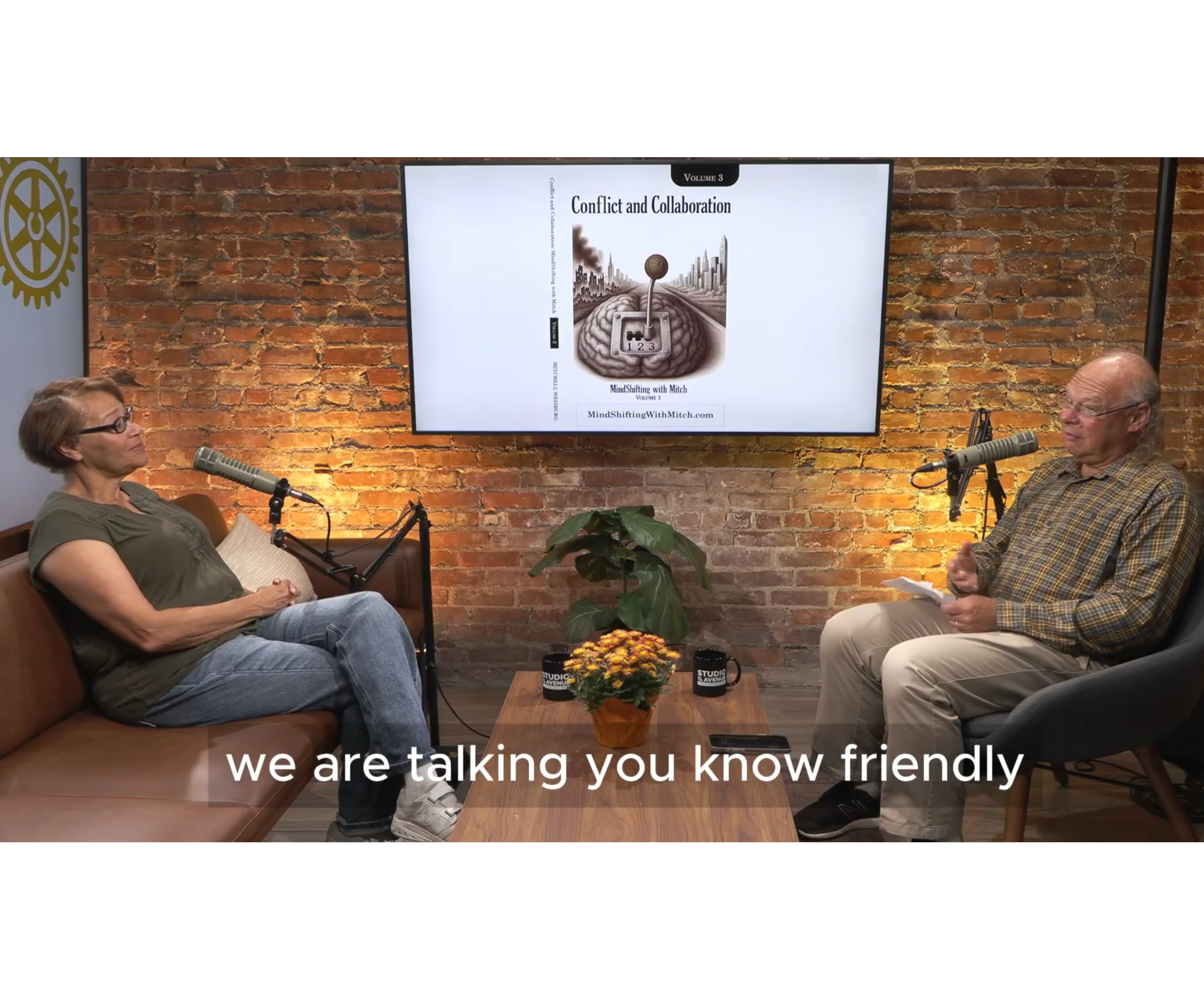
I’ve been invited by our local TV stations, LMC TV (Larchmont-Mamaroneck Cable), to record a monthly show on MindShifting. Our first episode went quite well I think.
Have you ever wondered how the ways we handle conflict can ripple through our workplaces, communities, and even within ourselves? In this, my first interview for LMC TV on the Impacts of MindShifting, I had the privilege of sitting down with my fellow Rotarian and friend, Marion Anderson, for a conversation about resilience, resourcefulness, and—most importantly—how we approach the inevitable challenges and disagreements that life presents.
Marion is a lifelong resident of Rye, NY, currently running for Rye City Council. She is the executive director of Heartsong, Inc, which provides clinically-based therapeutic educational and rehabilitative creative arts programs to enhance the functioning level and quality of life of individuals with special needs.
Marion and I are both proud members of Rotary, an organization with a long tradition of service and collaboration, locally and across the globe. Rotary has taught us many lessons about building community, tackling challenges together, and, above all, the importance of leading by example. Whether raising $40,000 for Alzheimer’s research or simply reaching out to a neighbor in need, these shared experiences have shaped our perspectives on conflict resolution—and our talk dove right into these themes.
People respect you when you make your needs known, people only object when you try to impose them.
During our discussion, we explored the critical difference between assertiveness and aggressiveness—a distinction that can make or break relationships, whether at home, at work, or in civic life. Assertiveness means being able to say, with respect and clarity, what we need or feel. It’s the difference between communicating, “I can’t work late tonight because I have commitments,” and instead lashing out, “You’re always making me stay late!” As Marion mentioned, many people—especially those eager to please—struggle to assert their needs for fear of seeming difficult or being disliked. On the flip side, aggressiveness demands compliance and often leaves others feeling diminished.
Both Marion and I shared examples from our own work. In Marion’s early childhood center, teaching staff to be assertive—not aggressive—creates a healthier, more cooperative environment for everyone, including the children who learn by watching the adults in their lives. In my experience as an educator and author on MindShifting, I’ve seen this principle hold true again and again: Assertiveness builds respect and trust; aggressiveness breeds resentment and fear.
But there’s another angle we explored—the long-term impact of the strategies we use to handle conflict. Consider the family: When a parent compassionately enforces bedtime, explaining the reasons and acknowledging the child’s feelings, they model empathy and consistency. Over time, this cultivates mutual respect, even if it’s not always appreciated in the moment. In government or community organizations, similarly, striking the right balance between standing firm and making room for others’ perspectives leads to better outcomes and a more cohesive society.
Setting bedtimes is a good example of when controling is the best strategy of resolving a conflict, but in our discussion, we also covered other strategies that work better in different situations.
If you’re curious about how these real-world strategies for conflict, success, and collaboration can spark positive change—not only for yourself but for your family, workplace, or neighborhood—I invite you to watch the full LMC TV interview with Marion Anderson. Tune in for stories, insights, and practical wisdom from two Rotarians passionate about making a difference, one conversation at a time.
Watch The Episode:
Time is running out on securing your free advance copy download of the MindShifting: Conflict and Collaboration book.

Leave a Reply