
Leadership is often discussed as a set of skills or traits, but what’s less appreciated is how much our effectiveness as leaders is shaped by the survival mind—the limbic system that governs our instincts and reactions.
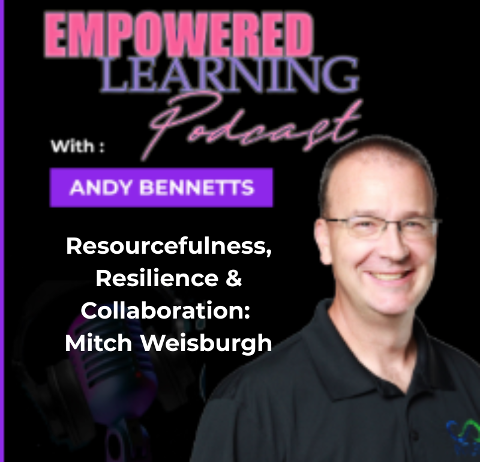
As I shared recently with Andy Bennetts on his Empowered Learning podcast, most of us operate in survival mode far more often than we realize.
When we’re absolutely certain we’re right, convinced someone else is wrong, or feel there’s only one way forward, that’s a sign our limbic mind is in control. In this state, our thinking becomes binary: good or bad, right or wrong, with little room for nuance or creativity.
Leaders—and people in general—are often sure because the survival mind (the limbic system) is wired for certainty. Certainty offers a sense of safety and control: when we’re sure, our brains categorize situations as either good or bad, right or wrong, which is a fundamental survival mechanism. This binary thinking helps us make quick decisions in high-stakes or ambiguous situations, which historically could mean the difference between safety and danger.
There are some benefits to being sure, especially in leadership:
- Decisiveness: Certainty allows leaders to make quick decisions, which can be crucial in crises or when time is limited.
- Confidence: Being sure can inspire confidence in others, helping teams feel secure and aligned behind a direction.
- Clarity: Certainty can cut through ambiguity, providing clear guidance and reducing confusion within a group.
The cost of staying in survival mode is high, however. While certainly can be useful in the short term, it shuts down the higher cognitive functions of the prefrontal cortex.
When we’re stuck in certainty, we lose access to critical leadership qualities—creativity, empathy, and collaboration. Our cognitive biases take over, making it nearly impossible to see perspectives that challenge our beliefs.
This is why, in my work on MindShifting, I emphasize the importance of recognizing when we’re in this state. The simple act of noticing (“Oh, there I am again, so sure I’m right”) can begin to shift us into what I call “Sage mode”—a resourceful, open, and collaborative mindset.
In Sage mode, we can also be decisive, confident, and clear, but channeled through a resourcefulness we do not have access to when we are in survival mode.
MindShifting is more than a concept; it’s also a set of practical techniques I’ve developed over the past eight years and taught to leaders, educators, and entrepreneurs worldwide.
My book, MindShifting: Stop Your Brain from Sabotaging Your Happiness and Success, distills these ideas into actionable steps anyone can use to move beyond the limitations of the survival mind.
On his podcast (video below) Andy Bennetts and I explored how these principles apply not just to personal growth, but to organizational leadership and education.
Andy’s podcast is a fantastic resource for anyone interested in empowering learning and leadership. Our conversation highlighted that true leadership is about helping others—and ourselves—find the greatness within, by learning to quiet the limbic mind and access our full potential.
If you’re interested in learning more about MindShifting, or want to explore how these ideas can transform your leadership, I invite you to connect with me or check out the book. Together, we can create environments where leaders and teams thrive.

Leave a Reply